TMD Disorders in Puducherry: Understanding Jaw Pain, Clicking Sounds, Headaches, and Modern Treatment Options at Dr Mugilan's Dental Clinic and Implant Center
Jaw pain, clicking sounds while chewing, difficulty opening your mouth, or frequent discomfort around the temples may be associated with temporomandibular disorders (TMD). Understanding the possible causes, symptoms, and treatment options can help you seek timely dental care. Learn how professional evaluation and personalised treatment may help improve jaw comfort and everyday function in Puducherry.

Dr Mugilan's Dental Team
·10 min read
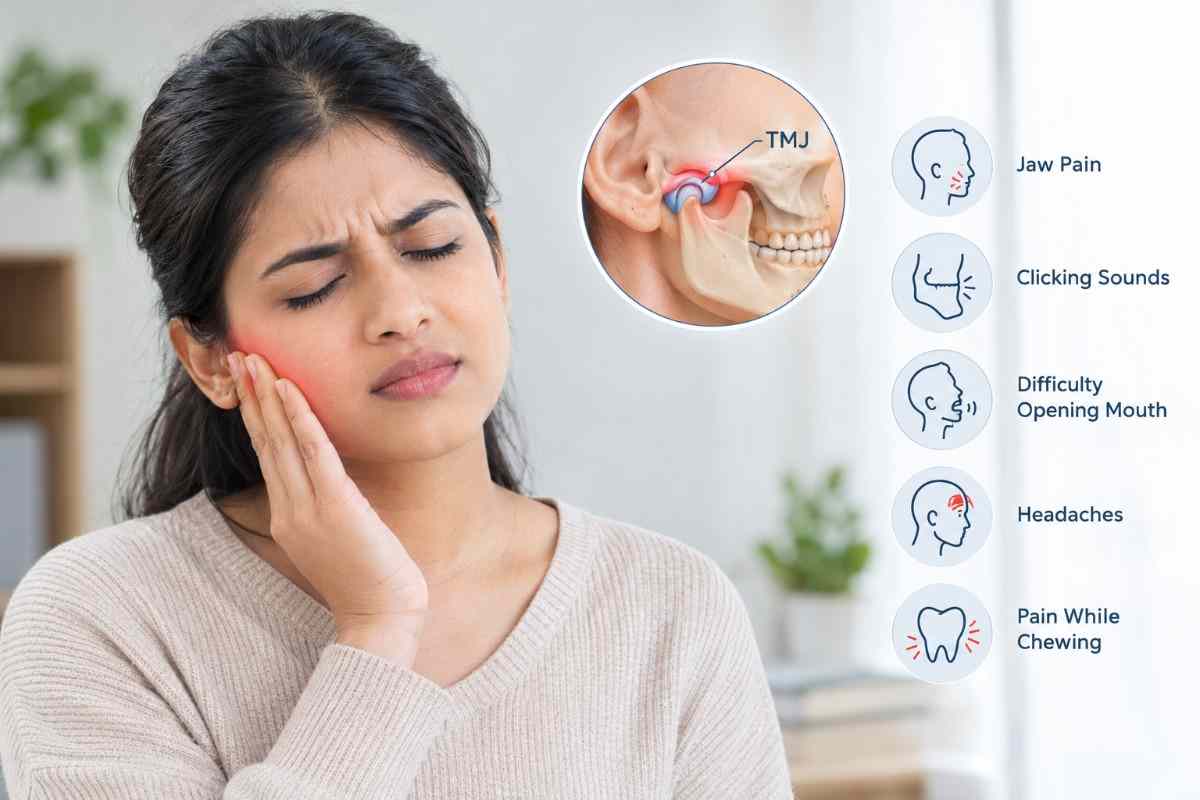
- Jaw discomfort can affect more than just eating. If you experience clicking sounds when opening your mouth, pain while chewing, difficulty moving your jaw, or recurring discomfort around your temples, you may have symptoms associated with temporomandibular disorders (TMD).
- These disorders affect the temporomandibular joints (TMJs), which connect the lower jaw to the skull, along with the muscles and other structures that support jaw movement. Although occasional jaw clicking is not always a cause for concern, persistent pain or restricted movement deserves professional attention.
- For people searching for TMD treatment in Puducherry, understanding the possible causes, warning signs, and available treatment options is an important first step. Dr Mugilan's Dental Clinic and Implant Center provides a range of dental services, including care for temporomandibular disorders, as part of its multispeciality dental practice.
- What Are Temporomandibular Disorders (TMD)?
- The temporomandibular joints are located on either side of the face, just in front of the ears. They help you open and close your mouth, chew food, speak, and yawn.
- These joints work with muscles, ligaments, and a small cushioning disc to support smooth jaw movement. When the joints, muscles, or surrounding structures become painful or do not function properly, the resulting conditions are commonly called temporomandibular disorders.
- TMD is a broad term rather than a single disease. Some cases primarily involve the jaw muscles, while others involve the joint itself. Certain patients may experience a combination of symptoms.
- The condition can affect daily activities, particularly when pain interferes with eating, speaking, sleeping, or maintaining normal oral habits.
- Common Symptoms of TMD
- TMD symptoms vary from person to person. Some people experience mild discomfort, while others have persistent pain or difficulty moving their jaws.
- 1. Jaw Pain or Tenderness
- Pain around the jaw joint, cheeks, or temples is a common symptom. The discomfort may become more noticeable when chewing, yawning, or opening the mouth widely.
- Some people experience tenderness in the muscles around the jaw, especially after waking up or following periods of prolonged chewing.
- 2. Clicking or Popping Sounds
- A clicking or popping sound may occur when opening or closing the mouth. These sounds can sometimes be associated with changes in how the joint disc moves.
- However, painless clicking without restricted movement is common and does not automatically require treatment. A dental evaluation is more important when clicking occurs alongside pain, locking, or difficulty moving the jaw.
- 3. Difficulty Opening or Closing the Mouth
- Some individuals find it difficult to open their mouths fully or feel that their jaws become temporarily stuck.
- Jaw locking or a sudden restriction in movement should be assessed by a healthcare professional, particularly if it develops unexpectedly or interferes with eating.
- 4. Headaches and Facial Discomfort
- TMD may be associated with headaches around the temples, facial muscle tenderness, or discomfort near the ears.
- These symptoms can overlap with migraines, tension headaches, ear conditions, and other health problems. Therefore, headaches should not automatically be attributed to TMD without an appropriate assessment.
- 5. Pain While Chewing
- Chewing may become uncomfortable when the jaw joints or surrounding muscles are irritated. Patients may notice that hard or chewy foods worsen their symptoms.
- If jaw discomfort repeatedly affects meals or daily activities, seeking professional advice can help identify the cause.
- What Causes TMD Disorders?
- There is no single cause of TMD. Symptoms may develop due to several interacting factors, and sometimes the exact cause remains unclear.
- Common contributing factors include:
- Teeth grinding and clenching: Repeatedly clenching the teeth or grinding them during sleep may place additional strain on the jaw muscles and joints.
- Stress and muscle tension: Stress can contribute to increased jaw clenching and muscle tension, potentially aggravating existing discomfort.
- Jaw injury: Trauma involving the jaw or face may affect the joint or surrounding structures.
- Joint-related changes: In some individuals, inflammation, degenerative joint changes, or altered movement of the joint disc may contribute to symptoms.
- Muscle overuse: Frequent gum chewing, biting hard objects, or repeatedly opening the mouth very widely may aggravate symptoms in susceptible individuals.
- Other health conditions: Certain inflammatory or musculoskeletal conditions can affect the jaw joints and require appropriate medical evaluation.
- Not every patient with these risk factors develops TMD. A thorough examination helps determine which factors may be relevant to an individual's symptoms.
- How Is TMD Diagnosed?
- Correct diagnosis is important because jaw pain can have several causes. Dental problems, facial muscle conditions, headaches, ear disorders, and other medical conditions may produce similar symptoms.
- A dentist assessing possible TMD may take the following steps.
- Review of Symptoms and Medical History
- The dentist may ask when the pain started, where it occurs, whether jaw movements make it worse, and whether the jaw ever locks.
- Information about teeth grinding, previous injuries, headaches, medication use, and existing health conditions may also be relevant.
- Examination of the Jaw and Muscles
- The examination may include checking how widely the mouth opens, observing jaw movement, assessing tenderness, and listening for joint sounds.
- The dentist may also examine the teeth and bite to identify other possible sources of discomfort.
- Imaging When Necessary
- Imaging is not required for every TMD case. Depending on the symptoms and examination findings, the dentist may recommend suitable imaging or refer the patient for further assessment.
- MRI can help evaluate soft tissues, including the joint disc, while CT or cone-beam CT may be useful when detailed assessment of the bony structures is needed. The choice depends on the clinical question and should be made by the treating professional.
- Treatment Options for TMD in Puducherry
- Treatment depends on the type of disorder, the severity of symptoms, and the patient's individual needs. Many cases can initially be managed with conservative, reversible approaches.
- At Dr Mugilan's Dental Clinic and Implant Center, patients can discuss jaw discomfort and possible TMD-related symptoms with a dental professional to understand the appropriate next steps.
- 1. Self-Care and Jaw Rest
- For some patients, temporary changes to daily habits can reduce strain on the jaw.
- A healthcare professional may recommend:
- Choosing softer foods during painful periods.
- Avoiding chewing gum and very hard or chewy foods.
- Avoiding excessive yawning or deliberately opening the mouth widely.
- Applying a warm or cold compress, depending on what provides relief.
- Keeping the jaw relaxed and avoiding unnecessary teeth clenching.
- These measures may help manage symptoms but should not replace an examination when pain persists.
- 2. Jaw Exercises and Physiotherapy
- Selected patients may benefit from guided jaw exercises, stretching, posture advice, or physiotherapy.
- Exercises should be appropriate to the diagnosed condition. Forceful movements or unsupervised exercises may aggravate some symptoms, particularly when the jaw is locked or movement is severely restricted.
- A qualified professional can help determine whether these approaches are suitable.
- 3. Medication When Appropriate
- Depending on the diagnosis, a healthcare professional may recommend short-term medication to manage pain or inflammation.
- Medication choice depends on medical history, existing conditions, and potential interactions. Patients should avoid prolonged self-medication and seek professional advice before using prescription medicines.
- 4. Occlusal Splints or Night Guards
- For selected patients, a professionally assessed oral appliance may help protect the teeth from grinding-related damage or support symptom management.
- However, splints do not work for every TMD condition, and the evidence of benefit varies. They should be fitted and monitored by an appropriate professional. Appliances that permanently alter the bite should not be used without a clear clinical indication.
- 5. Management of Teeth Grinding
- If clenching or grinding contributes to the symptoms, the treatment plan may include habit awareness, stress-management strategies, sleep assessment where indicated, and protection against tooth wear.
- Addressing contributing factors may help reduce strain on the jaw muscles.
- 6. Further Specialist Treatment
- Persistent or complex symptoms may require referral to an oral and maxillofacial specialist, a clinician experienced in orofacial pain, or another appropriate healthcare professional.
- Invasive procedures and surgery are not first-line treatments for most TMD cases. They are considered only in selected circumstances after careful assessment.
- Can TMD Be Prevented?
- Not every case can be prevented, but certain habits may help reduce unnecessary strain on the jaw.
- Avoid repeatedly clenching your teeth during the day.
- Limit habits such as chewing ice or biting hard objects.
- Take breaks if prolonged chewing aggravates your symptoms.
- Practise relaxation techniques if stress contributes to jaw tension.
- Seek advice if you notice significant tooth wear or persistent grinding.
- Arrange an evaluation if jaw pain, locking, or restricted movement continues.
- Early assessment can help identify contributing factors and prevent patients from relying on unsuitable home remedies.
- When Should You Seek Dental Care?
- Consider arranging a dental consultation if you experience persistent jaw pain, painful clicking, difficulty chewing, recurrent facial discomfort, or restricted mouth opening.
- Seek urgent medical or dental assessment if your jaw becomes suddenly locked, you cannot open or close your mouth normally, or symptoms develop following a significant injury. Jaw pain accompanied by chest discomfort, breathlessness, sweating, or pain spreading to the arm requires emergency medical attention, as it may indicate a problem unrelated to TMD.
- It is also important to remember that not all jaw pain originates in the temporomandibular joint. A professional evaluation can help distinguish TMD from dental infections and other conditions that may require different treatment.
- TMD Care at Dr Mugilan's Dental Clinic and Implant Center
- Jaw pain and restricted movement can interfere with everyday comfort, eating, and speaking. Understanding the cause of these symptoms is an important step towards selecting appropriate care.
- Dr Mugilan's Dental Clinic and Implant Center in Puducherry is a modern, multispeciality dental clinic offering services such as dental implants, Invisalign aligners, smile designing, dentures, root canal treatments, tooth caps and veneers, children's dentistry, full mouth rehabilitation, and TMD-related care.
- Its digital dental technology supports selected diagnostic and treatment workflows where appropriate. The specific assessment or treatment recommended for TMD will depend on the patient's symptoms and clinical findings.
- If you are experiencing persistent jaw discomfort, visit the clinic website to learn more about its services and find contact information for consultation and appointment enquiries.
- Website: https://drmugilandentistry.com/
- Frequently Asked Questions About TMD
- 1. Is jaw clicking always a sign of TMD?
- No. Painless clicking without restricted movement is common and does not necessarily require treatment. Clicking accompanied by pain, locking, or difficulty opening the mouth should be assessed.
- 2. Can stress cause jaw pain?
- Stress may contribute to teeth clenching and muscle tension, which can aggravate jaw discomfort. However, jaw pain may have other causes that should be considered during an evaluation.
- 3. Can TMD go away on its own?
- Some TMD symptoms improve over time with simple self-care and reduced jaw strain. Persistent, worsening, or function-limiting symptoms require professional assessment.
- 4. Do all TMD patients need a night guard?
- No. An oral appliance is appropriate only for selected patients after an assessment. The treatment plan depends on the cause of the symptoms and the individual's dental condition.
- 5. Does TMD always require surgery?
- No. Most cases are initially managed with conservative approaches. Specialist procedures are considered only when clinically indicated.
- Conclusion
- Temporomandibular disorders can cause jaw pain, muscle tenderness, clicking sounds, headaches, and difficulty chewing or opening the mouth. Because these symptoms can overlap with other dental and medical conditions, accurate assessment is essential.
- Simple self-care, guided exercises, appropriate medication, and selected oral appliances may help manage symptoms in suitable cases. More complex or persistent conditions may require specialist evaluation.
- If you are experiencing ongoing jaw discomfort in Puducherry, consider consulting a dental professional to understand the possible cause and available treatment options.
- Explore the services and appointment information at Dr Mugilan's Dental Clinic and Implant Center:
- https://drmugilandentistry.com/
- Disclaimer: This article is intended for general educational purposes only. It does not replace a professional examination, diagnosis, or personalised treatment advice.