Space Maintainers in Puducherry: Why Children May Need Them After Early Tooth Loss, Types of Appliances, and How They Help Guide Permanent Teeth into the Right Position
When a child loses a baby tooth earlier than expected, nearby teeth may gradually move into the empty space, affecting the eruption of permanent teeth. Space maintainers can help preserve this space and support proper dental development. Learn when children may need them and why timely dental evaluation matters.

Dr Mugilan's Dental Team
·9 min read
Baby teeth play an important role in a child's dental development. They help children chew, speak clearly, and maintain the space required for permanent teeth to emerge. Although baby teeth eventually fall out naturally, losing one too early because of tooth decay, injury, or extraction can sometimes create problems with the alignment of developing permanent teeth.
One dental solution that may help in these situations is a space maintainer. This specially designed dental appliance helps preserve the space left by a prematurely lost baby tooth. Understanding when a child may need one can help parents make informed decisions about their child's oral health.
At Dr Mugilan's Dental Clinic and Implant Center, Puducherry, children can receive dental evaluations and guidance based on their individual oral health and developmental needs.
What Is a Space Maintainer?
A space maintainer is a dental appliance designed to hold open the space left by a baby tooth that has been lost earlier than expected.
Baby teeth act as natural guides for permanent teeth. When a baby tooth falls out at the appropriate time, the permanent tooth generally follows its expected eruption path. However, if the baby tooth is removed too early, neighbouring teeth may gradually move towards the empty space.
This movement can reduce the room available for the permanent tooth. A space maintainer helps prevent unwanted movement and preserves the space until the permanent tooth is ready to emerge.
Not every child who loses a baby tooth needs this appliance. A dentist evaluates the child's age, tooth position, dental development, and expected eruption time before recommending treatment.
Why Might a Child Need a Space Maintainer?
There are several reasons why children may lose baby teeth earlier than expected.
1 . Severe Tooth Decay
Untreated cavities can damage baby teeth significantly. When the damage becomes extensive, the dentist may recommend extraction if the tooth cannot be restored.
If the tooth is lost well before the permanent tooth is ready to erupt, maintaining the space may become important.
2 . Dental Injuries
Children may experience falls, sports injuries, or accidents that damage their teeth. Sometimes, an injured baby tooth cannot be saved and needs to be removed.
A dental assessment can help determine whether a space maintainer is necessary after the extraction.
3 . Early Tooth Extraction
Certain dental conditions may require the removal of a baby tooth before its natural shedding time. Depending on the tooth involved and the child's dental development, a space maintainer may help preserve the available space.
4 . Premature Tooth Loss Due to Infection
Infections involving baby teeth can sometimes lead to early tooth loss. After treating the infection and assessing the surrounding teeth, the dentist may consider whether space maintenance is appropriate.
What Happens If the Space Is Not Maintained?
When a baby tooth is lost prematurely, nearby teeth may gradually shift towards the empty area. This can reduce the space available for the permanent tooth.
Possible consequences include:
Crowding when permanent teeth emerge.
Permanent teeth erupting in an unusual position.
Reduced space in the dental arch.
Changes in the alignment of neighbouring teeth.
A greater possibility of needing orthodontic assessment later.
These problems do not occur in every child. The impact depends on factors such as the child's age, which tooth was lost, the time remaining before permanent tooth eruption, and the existing alignment of the teeth.
Early dental evaluation helps identify children who may benefit from preventive treatment.
Types of Space Maintainers Used in Children's Dentistry
Space maintainers are available in different designs. The dentist selects an appropriate option depending on the number and location of missing baby teeth, the child's dental development, and the expected eruption of permanent teeth.
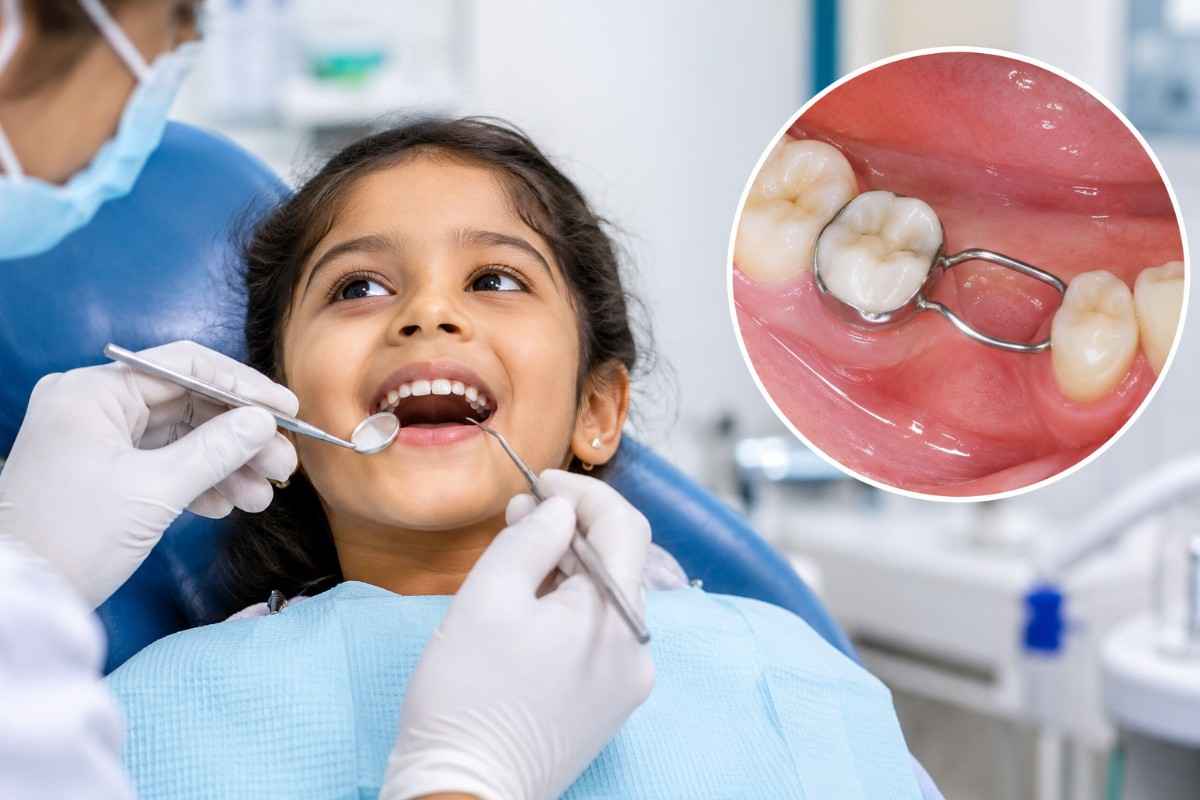
1 . Band and Loop Space Maintainer
This is a commonly used fixed appliance for maintaining the space left by a single missing baby tooth.
It generally consists of a metal band placed around a neighbouring tooth and a loop that extends across the empty space. The loop helps prevent nearby teeth from moving into the gap.
2 . Crown and Loop Space Maintainer
This appliance may be considered when the neighbouring tooth needs a dental crown because of extensive damage or previous treatment.
A crown is placed over the supporting tooth, with a loop extending into the space that needs to be maintained.
3 . Distal Shoe Space Maintainer
In selected cases where a second primary molar is lost before the first permanent molar erupts, a distal shoe appliance may be considered.
It helps guide the eruption of the permanent molar and maintain the required space. This appliance requires careful planning and regular professional monitoring.
4 . Removable Space Maintainer
Some children may be suitable for a removable appliance, depending on their dental condition and ability to wear and care for it properly.
The dentist will assess whether a removable design is practical for the child's age, oral health, and cooperation.
How Is a Space Maintainer Fitted?
The treatment process generally involves a few steps:
Step 1 : Dental Examination
The dentist examines the child's teeth, gums, bite, and the space created by the missing baby tooth.
Step 2 : Diagnostic Assessment
Dental X-rays may be recommended when necessary to understand the position and development of the permanent tooth underneath the gums.
Step 3 : Appliance Selection
Based on the examination, the dentist decides whether a space maintainer is required and selects a suitable design.
Step 4 : Appliance Placement
Depending on the type of appliance, it may be fixed to a supporting tooth or designed to be removable. The dentist checks its fit and comfort.
Step 5 : Regular Follow-Up
The child needs periodic dental reviews to monitor the appliance, surrounding teeth, and development of the permanent tooth.
How Should Parents Care for a Space Maintainer?
Good oral hygiene and regular dental visits are important while a child wears a space maintainer.
Parents can encourage children to follow these simple habits:
Brush twice daily using an age-appropriate fluoride toothpaste.
Clean carefully around the appliance and supporting teeth.
Avoid chewing hard, sticky, or excessively chewy foods that may damage or dislodge the appliance.
Do not allow children to pull, bend, or play with the appliance using their fingers or tongue.
Attend scheduled dental check-ups.
Contact the dentist if the appliance becomes loose, breaks, or causes discomfort.
- If a fixed space maintainer becomes loose or comes off, parents should arrange a dental appointment rather than trying to repair or reposition it at home.
- When Is a Space Maintainer Removed?
A space maintainer is generally kept in place until the permanent tooth is sufficiently developed and ready to erupt into the space.
The dentist monitors the eruption process and determines the appropriate time for removal. Some children may need the appliance for several months, while others may require it for a longer period.
Regular follow-up is important because an appliance that remains in place longer than necessary may interfere with normal tooth eruption or cause other complications.
Does Every Child Who Loses a Baby Tooth Need a Space Maintainer?
No. A space maintainer is not necessary in every case of early baby tooth loss.
The decision depends on several factors, including:
Which baby tooth was lost.
The child's age and dental development.
How much time remains before the permanent tooth is expected to erupt.
The available space in the dental arch.
The position of neighbouring teeth.
The child's overall oral health.
For example, if a permanent tooth is already close to emerging, a space maintainer may not be required. In other cases, preserving the space may help reduce the risk of alignment problems.
A dental examination is the best way to determine the appropriate approach.
Why Early Dental Visits Matter for Children
Children's dental development changes as they grow. Regular dental visits help identify cavities, damaged teeth, premature tooth loss, and developing alignment concerns.
Preventive dental care also allows parents to understand their child's oral hygiene needs and receive guidance about brushing, diet, fluoride use, and dental appliances when necessary.
- At Dr Mugilan's Dental Clinic and Implant Center, Puducherry, children can receive dental evaluation and care as part of the clinic's multi-speciality dental services. The clinic's digital dental technology can support diagnostic assessment and treatment planning when clinically appropriate.
- Frequently Asked Questions
1 . At what age can a child need a space maintainer?
There is no fixed age. A child may need one if a baby tooth is lost prematurely and the dentist determines that preserving the space is important for permanent tooth development.
2 . Is fitting a space maintainer painful?
The fitting process is generally straightforward. Some children may experience temporary pressure or mild discomfort while adjusting to the appliance. The dentist can assess and address any persistent discomfort.
3 . Can a child eat normally with a space maintainer?
Most children can eat normally after adjusting to the appliance. However, hard and sticky foods should be avoided if they could damage or dislodge it.
4 . How long does a child need to wear a space maintainer?
The duration varies depending on the child's dental development and the eruption of the permanent tooth. Regular dental monitoring helps determine when it can be removed.
5 . Can a space maintainer prevent braces later?
A space maintainer helps preserve the space required for permanent teeth, but it cannot guarantee that a child will not need braces. Future orthodontic needs depend on several factors, including jaw growth, tooth size, and alignment.
Support Your Child's Growing Smile with Timely Dental Care in Puducherry
Baby teeth may be temporary, but their role in guiding permanent teeth is important. When a child loses a baby tooth earlier than expected, a timely dental evaluation can help determine whether a space maintainer is needed.
Understanding the available options and following regular dental check-ups can help parents support their child's oral development and identify potential alignment concerns early.
If your child has lost a baby tooth due to decay, injury, or early extraction, consider arranging a dental consultation to understand the next steps.
Dr Mugilan's Dental Clinic and Implant Center offers children's dental care along with services such as dental implants, Invisalign aligners, smile designing, dentures, root canal treatments, tooth caps and veneers, TMD care, and full mouth rehabilitation.
To learn more about the clinic or enquire about an appointment, visit https://drmugilandentistry.com/.
Early attention to children's dental health can help protect the space needed for their growing permanent smiles.