Root Canal Treatment vs Tooth Extraction in Puducherry: How Digital Dentistry Helps Preserve Natural Teeth and Restore Oral Health
Severe tooth pain, deep cavities, or dental infections may leave you wondering whether a root canal or tooth extraction is the right choice. Understanding the differences can help you make an informed decision. Explore treatment options, recovery expectations, and how modern digital dentistry supports dental care in Puducherry.
Dr Mugilan's Dental Team
·8 min read
Tooth pain can interfere with eating, sleeping, speaking, and everyday activities. When a tooth develops deep decay, an infection, or extensive damage, many patients wonder whether it can be saved with root canal treatment or whether extraction is necessary.
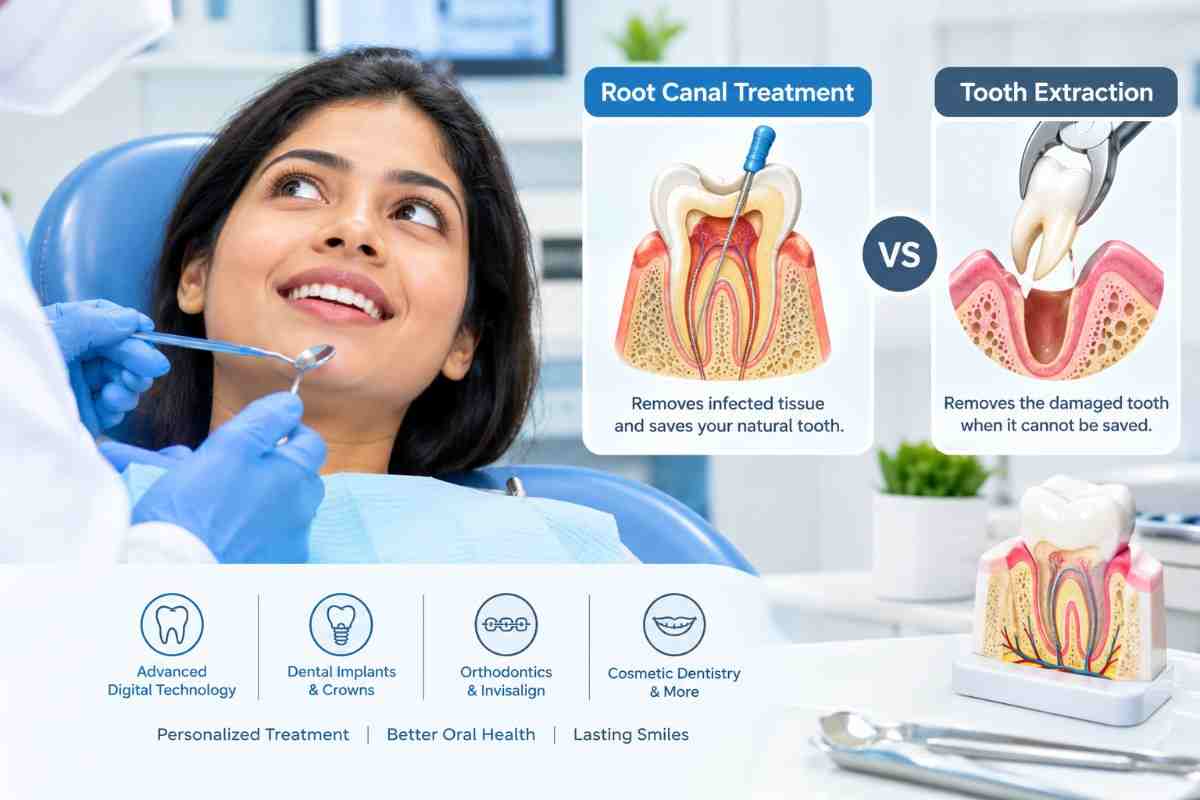
Both procedures have important roles in modern dentistry, but they serve different purposes. Root canal treatment aims to preserve a natural tooth by removing infected or damaged tissue from inside it, while extraction removes the affected tooth when it cannot be predictably restored or when removal is otherwise indicated.
- For patients seeking dental treatment in Puducherry, understanding these options can make discussions with a dentist easier. At Dr Mugilan's Dental Clinic and Implant Center, a modern, multi-speciality dental clinic, patients can explore suitable treatment options based on their dental condition, examination findings, and long-term oral health needs.
- What Is Root Canal Treatment?
- Root canal treatment, also called endodontic treatment, is a procedure used to treat problems affecting the dental pulp. The pulp is the soft tissue inside a tooth containing nerves, blood vessels, and connective tissue.
Deep cavities, cracks, trauma, or repeated dental procedures can damage the pulp. If the damage is irreversible or the pulp becomes infected, root canal treatment may be recommended.
- During the procedure, the dentist generally:
- 1. Examines the affected tooth and takes appropriate dental X-rays.
- 2. Administers local anaesthesia to improve comfort.
- 3. Creates an opening to access the pulp chamber and root canals.
- 4. Removes the infected or damaged tissue.
- 5. Cleans, shapes, and disinfects the root canals.
- 6. Fills and seals the canals to help prevent reinfection.
- 7. Restores the tooth with a suitable filling or dental crown when indicated.
- The number of appointments depends on the tooth's condition and treatment complexity.
- Benefits of root canal treatment
- The main advantage is that it may allow you to retain your natural tooth rather than remove it.
- Other potential benefits include:
- Preserving natural chewing function.
- Maintaining the existing position of the tooth.
- Avoiding the immediate need to replace an extracted tooth.
- Helping eliminate infection-related pain when treatment is successful.
- Supporting the long-term stability of the surrounding teeth.
- A root canal-treated tooth may need a dental crown to protect it against fracture, particularly when significant tooth structure has been lost. The restoration recommended depends on the tooth's location, remaining structure, and biting forces.
- When Is Tooth Extraction Necessary?
- Tooth extraction involves removing a tooth from its socket. Dentists may recommend this when the tooth cannot be restored predictably or when removing it offers a better outcome for the patient's oral health.
- Common reasons include:
- Extensive decay that leaves insufficient healthy tooth structure for restoration.
- A severe fracture extending below the gum line or into the root.
- Advanced periodontal disease causing substantial loss of supporting bone.
- Certain infections that cannot be managed successfully by preserving the tooth.
- Some impacted teeth or teeth causing other complications.
- Specific orthodontic treatment plans where extraction is clinically indicated.
- Not every infected or painful tooth needs to be extracted. In many cases, a tooth affected by infection may still be treatable with root canal therapy.
- The dentist must assess the tooth's restorability, supporting tissues, root condition, and overall prognosis before recommending removal.
- Root Canal vs Tooth Extraction: What Is the Difference?
- Factor Root canal treatment Tooth extraction
- Main purpose Preserve the natural tooth Remove the affected tooth
- Suitable when The tooth can be restored and has a reasonable prognosis The tooth cannot be predictably saved or removal is indicated
- Natural tooth retained Yes No
- Restoration Filling or crown may be required Replacement may be considered
- Recovery Mild tenderness may occur after treatment Healing of the extraction socket is required
- Long-term care Maintain the tooth and its restoration Maintain the extraction site and any replacement tooth
- Neither option is automatically better for every patient. The right decision depends on the clinical findings, expected outcome, cost, treatment requirements, and patient preferences.
- Why Saving Your Natural Tooth Can Matter
- Natural teeth work together to support chewing, speech, and the overall balance of the bite.
When a natural tooth can be successfully treated and restored, preserving it may help maintain the existing arrangement of the teeth and avoid some of the additional procedures associated with tooth replacement.
Leaving an extracted tooth unreplaced can sometimes allow neighbouring teeth to drift into the space or the opposing tooth to move towards it. Changes in chewing efficiency may also occur, depending on which tooth is missing and the patient's overall dental condition.
However, retaining a tooth is not always the best choice if its structure or supporting tissues are severely compromised. A poorly functioning tooth may require repeated treatment without providing a predictable long-term result.
- Your dentist can explain whether preservation or extraction is more appropriate in your situation.
- How Digital Dentistry Supports Treatment Planning
- Modern dental technology can help clinicians assess tooth structure, identify the extent of damage, and plan appropriate treatment.
- At a digitalised dental clinic such as Dr Mugilan's Dental Clinic and Implant Center, technology may support different stages of diagnosis, treatment planning, and restoration, depending on the patient's needs.
- 1. Digital diagnostic imaging
- Dental radiographs help evaluate root anatomy, the surrounding bone, and changes associated with infection. In selected complex cases, three-dimensional imaging such as CBCT may be considered when it provides information that could affect treatment decisions.
- CBCT is not necessary for every root canal or extraction. Imaging should be selected according to the clinical indication.
- 2. More informed treatment decisions
- A clinical examination combined with suitable imaging helps the dentist evaluate whether enough healthy tooth structure remains for a successful restoration.
- The assessment may also consider the condition of the roots, gum support, bite, and any existing restorations.
- 3. Planning the final restoration
- After root canal treatment, a tooth may require a filling or crown. Digital workflows can support certain restorative procedures, depending on the equipment and treatment plan.
If extraction is necessary, the dentist can discuss replacement options such as dental implants, bridges, or dentures when appropriate.
- Digital planning can support clinical decisions, but the outcome still depends on the tooth's condition, the chosen procedure, and ongoing oral care.
- What Happens If the Tooth Needs to Be Extracted?
- If extraction is the recommended option, the dentist will explain the procedure, expected healing, and whether replacement is advisable.
Depending on the tooth and the patient's oral health, replacement options may include the following.
Dental implants: An implant is placed in the jawbone to support a replacement tooth. Suitability depends on bone volume, gum health, medical history, and other factors.
Dental bridges: A bridge replaces a missing tooth using support from neighbouring teeth or other appropriate structures.
Dentures: Removable dentures may replace one or more missing teeth, depending on the design and clinical requirements.
A replacement tooth is not always needed immediately. The appropriate timing depends on the extraction site, infection status, healing, and the planned treatment.
- Dr Mugilan's Dental Clinic and Implant Center offers services including dental implants, complete and removable dentures, tooth caps and veneers, and full mouth rehabilitation. These services may be relevant when planning the restoration of oral function after tooth loss.
- Is Root Canal Treatment Painful?
- Many patients worry that root canal treatment will be painful. Modern techniques and local anaesthesia help control discomfort during the procedure.
Some tenderness may occur afterwards, particularly if the tissues around the root were inflamed or infected before treatment. This usually improves over time, but persistent or worsening pain should be reviewed by the dentist.
Extraction also involves local anaesthesia, and some soreness or swelling can occur during healing.
- The experience varies according to the severity of the condition, the complexity of treatment, and individual factors. Tell your dentist about your concerns, medical conditions, allergies, and current medications before treatment.
- How Can You Prevent a Tooth from Reaching This Stage?
- Although not every dental problem can be prevented, regular oral care can reduce the risk of advanced decay and infection.
- Follow these habits to help protect your teeth:
- Brush twice daily with fluoride toothpaste.
- Clean between your teeth using floss or suitable interdental cleaning aids.
- Limit frequent consumption of sugary snacks and drinks.
- Attend dental checkups at intervals recommended for your oral health.
- Seek treatment for cavities before they progress deeper into the tooth.
- Avoid chewing hard objects that may damage teeth.
- Do not ignore persistent sensitivity, swelling, or tooth pain.
- Early treatment may allow a dentist to manage decay with a simpler restoration before the pulp becomes irreversibly damaged.
- When Should You See a Dentist in Puducherry?
- Arrange a dental appointment if you experience persistent toothache, pain while biting, prolonged sensitivity to hot or cold foods, a broken tooth, or swelling around a tooth.
Seek urgent dental care for facial swelling, fever associated with dental pain, or rapidly worsening symptoms. Difficulty breathing or swallowing, or swelling that spreads into the neck, requires emergency medical attention.
Do not take leftover antibiotics or place aspirin directly against the affected tooth or gum. Antibiotics alone generally cannot resolve the underlying cause of most dental infections, and definitive dental treatment may be necessary.
- An examination helps establish whether the tooth can be preserved, needs root canal treatment, or should be removed.
- Conclusion
- Choosing between root canal treatment and tooth extraction requires more than assessing how much a tooth hurts. The dentist must evaluate the extent of damage, the condition of the root and surrounding bone, and whether the tooth can be restored successfully.
When a tooth is restorable, root canal treatment may help preserve natural chewing function. When the damage is too extensive or the prognosis is poor, extraction may be the more appropriate option, followed by a discussion of tooth replacement where needed.
If you are experiencing tooth pain or have been advised to remove a tooth, a professional assessment can help you understand the available options.
For dental consultations and information about treatments, visit Dr Mugilan's Dental Clinic and Implant Center. You can explore the clinic's services and use the website to find contact information and arrange an appointment.