Invisalign Retainers in Puducherry: Why Wearing Retainers After Clear Aligner Treatment Is Essential, How They Prevent Teeth from Shifting, and Tips for Maintaining Your New Smile – Dr Mugilan's Dental Clinic and Implant Center
Completing Invisalign treatment is an exciting step towards achieving a straighter smile, but maintaining those results requires proper retainer use. Learn why Invisalign retainers are important, how they prevent teeth from shifting, the different types available, and practical tips to protect your newly aligned smile.

Dr Mugilan's Dental Team
·8 min read
Completing Invisalign treatment is an exciting milestone for anyone who has worked towards achieving a straighter, more confident smile. After months of wearing clear aligners, seeing your teeth in their improved positions can feel rewarding. However, orthodontic treatment does not end when you finish wearing your final aligner. Maintaining the results requires another important step: wearing retainers.
Invisalign retainers in Puducherry help maintain the alignment achieved during clear aligner treatment and reduce the possibility of teeth gradually moving back towards their previous positions. Understanding how retainers work, when to wear them, and how to care for them can help protect your orthodontic results.
At Dr Mugilan's Dental Clinic and Implant Center, patients can explore modern orthodontic solutions, including Invisalign treatment, and receive guidance on maintaining their smile after treatment.
What Are Invisalign Retainers?
Invisalign retainers are specially designed dental appliances used after orthodontic treatment to help keep teeth in their corrected positions.
During Invisalign treatment, patients wear a series of transparent aligners that gradually move teeth into planned positions. Once the desired alignment is achieved, the teeth and surrounding supporting tissues need time to adapt to their new positions.
Retainers help maintain this alignment while the surrounding periodontal tissues and bone undergo changes associated with orthodontic treatment.
Unlike active aligners, which are designed to move teeth, retainers are primarily intended to hold teeth in their corrected positions.
One commonly used option is the Vivera retainer system, developed by Invisalign. Other removable and fixed retainer options may also be recommended depending on the patient's orthodontic requirements.
Why Are Retainers Important After Invisalign Treatment?
Many patients assume that once their teeth look straight, they will automatically remain in that position. However, teeth naturally have a tendency to move throughout life.
This tendency is known as orthodontic relapse.
There are several reasons why retainers are important after completing clear aligner treatment.
1 . Preventing Teeth from Shifting
After orthodontic movement, the surrounding tissues need time to stabilise. Without proper retention, teeth may gradually move towards their original positions.
Wearing retainers as instructed helps maintain the alignment achieved through Invisalign treatment.
2 . Supporting Gum and Bone Adaptation
Teeth are supported by the periodontal ligament, surrounding gum tissues, and jawbone. These supporting structures gradually adapt after orthodontic movement.
Retainers help maintain tooth positioning while this adaptation takes place.
3 . Preserving Your Smile Alignment
Patients invest time and effort in achieving properly aligned teeth. Wearing retainers helps protect these results and maintain a balanced dental appearance.
4 . Maintaining Bite Correction
Orthodontic treatment may also improve how the upper and lower teeth meet when biting or chewing.
Consistent retainer use helps maintain the corrected tooth positions that contribute to the planned bite relationship.
What Happens If You Stop Wearing Your Retainers?
Stopping retainer use without professional guidance may increase the risk of orthodontic relapse.
Some common changes include:
Front teeth gradually becoming crowded again.
Small gaps reappearing between teeth.
Previously corrected rotations returning.
Changes in the alignment of the upper or lower dental arch.
Changes in how the teeth meet during biting.
The extent of tooth movement varies between individuals. Some patients may notice changes relatively quickly, while others may experience gradual movement over a longer period.
If your retainer no longer fits comfortably, do not force it over your teeth. Contact your orthodontist for an assessment.
Types of Retainers Used After Invisalign Treatment
The appropriate retainer depends on the patient's treatment history, tooth alignment, bite, and individual orthodontic needs.
1 . Clear Removable Retainers
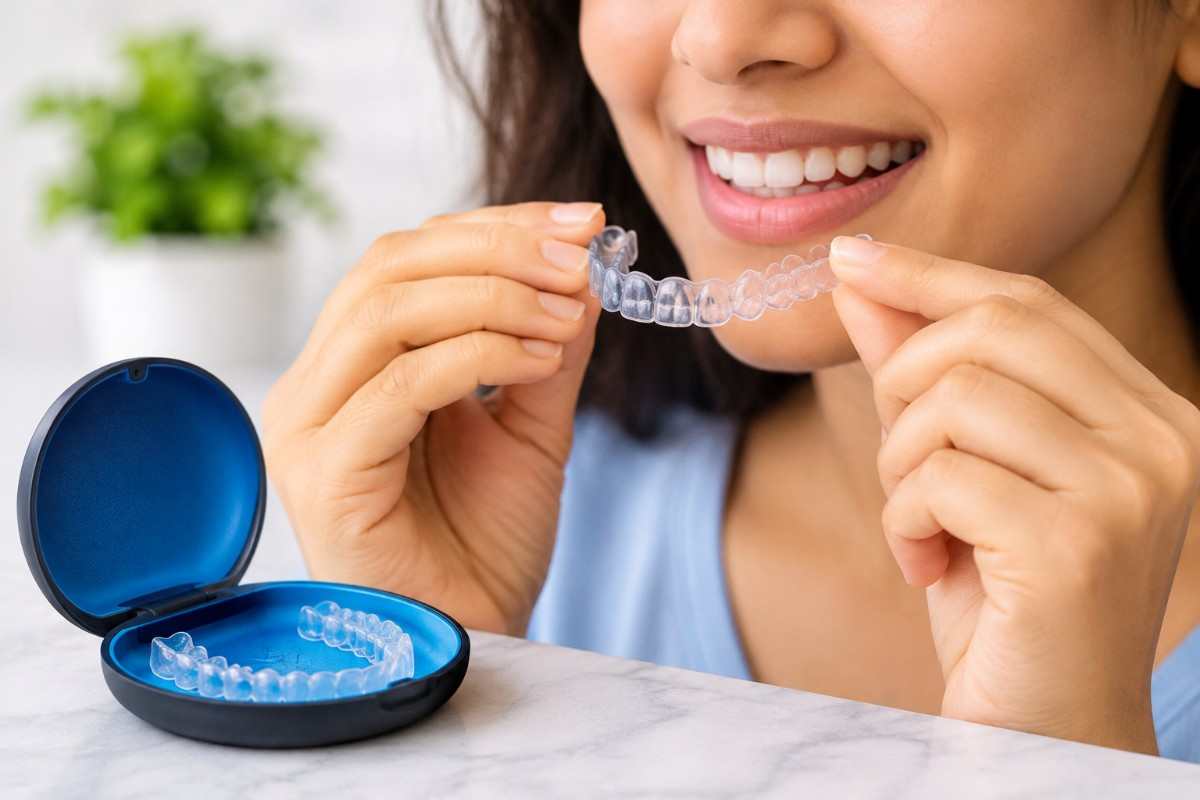
Clear retainers are transparent, custom-made appliances that fit over the teeth.
They are similar in appearance to clear aligners but are designed to maintain the final tooth positions rather than actively move them.
Advantages include:
Transparent appearance.
Comfortable fit when properly designed.
Easy removal during meals and brushing.
Convenient cleaning and maintenance.
However, patients must remember to wear them according to the prescribed schedule.
2 . Fixed Retainers
Fixed retainers consist of a thin wire bonded to the inner surfaces of selected teeth, commonly the lower front teeth.
Since they remain attached to the teeth, patients do not need to remember to insert them every day.
However, cleaning around fixed retainers requires additional attention because plaque and food particles can accumulate around the wire.
3 . Vivera Retainers
Vivera retainers are a type of clear removable retainer associated with the Invisalign system.
They are custom-made using digital impressions or scans and are designed to maintain the alignment achieved after orthodontic treatment.
Your orthodontist can explain whether this option is appropriate for your dental requirements.
How Long Should You Wear Invisalign Retainers?
Retainer-wearing schedules vary depending on individual treatment needs.
Many orthodontists recommend full-time retainer wear initially, except during eating, drinking anything other than water, and cleaning, before gradually transitioning to nighttime wear.
However, the exact schedule should be determined by your treating orthodontist.
In many cases, long-term nighttime retainer use is recommended because teeth can continue to shift throughout adulthood.
It is important not to reduce retainer-wearing time simply because your teeth appear stable.
How to Take Care of Your Invisalign Retainers
Proper cleaning and storage help maintain retainer hygiene and durability.
Here are some useful care practices:
1 . Clean Your Retainers Regularly
Rinse your retainers with cool or lukewarm water after removing them.
Use a soft toothbrush and an appropriate cleaning product recommended by your orthodontist.
Avoid using abrasive toothpaste or harsh cleaning chemicals unless specifically advised.
2 . Avoid Hot Water
Hot water can distort the shape of clear retainers and affect their fit.
Always use cool or lukewarm water for cleaning.
3 . Store Them Safely
Keep removable retainers inside their protective case whenever they are not being worn.
Avoid wrapping them in tissues or leaving them on tables, as they may be accidentally thrown away or damaged.
4 . Remove Them Before Eating
Unless your orthodontist provides different instructions, remove clear removable retainers before eating.
Food particles can become trapped between the appliance and teeth, potentially affecting oral hygiene.
5 . Maintain Regular Dental Check-ups
Regular dental examinations help monitor tooth stability, retainer condition, and overall oral health.
If you notice cracks, looseness, discomfort, or changes in fit, seek professional advice.
Common Mistakes to Avoid When Wearing Retainers
Even after successful Invisalign treatment, certain habits can affect the effectiveness of retention.
Avoid these common mistakes:
Wearing retainers only when your teeth start shifting.
Forgetting to wear them regularly.
Cleaning them with hot water.
Leaving them exposed without a protective case.
Continuing to use cracked or damaged retainers.
Forcing a retainer that no longer fits properly.
Skipping orthodontic follow-up appointments.
Consistency is important for maintaining the results of orthodontic treatment.
When Should You Replace Your Invisalign Retainers?
Retainers may need replacement if they become damaged, lose their shape, develop cracks, or no longer fit correctly.
Other signs that may indicate a replacement is necessary include:
Visible cracks or rough edges.
Persistent discomfort during wear.
Loose fitting around the teeth.
Discolouration or damage that cannot be cleaned.
Difficulty seating the retainer properly.
Do not attempt to repair a damaged retainer yourself. Your orthodontist can assess whether a replacement is required.
Are Invisalign Retainers Necessary for Every Patient?
Most patients who complete orthodontic treatment require some form of retention to maintain their results.
However, the type of retainer and wearing schedule may differ.
Factors that influence retainer recommendations include:
The original degree of dental crowding.
Previous gaps or spacing between teeth.
The complexity of orthodontic tooth movements.
Bite correction requirements.
Individual tendency towards orthodontic relapse.
Overall dental and gum health.
Your orthodontist will recommend a retention plan based on your specific treatment outcome.
Invisalign Treatment and Retainer Guidance at Dr Mugilan's Dental Clinic and Implant Center, Puducherry
Achieving a properly aligned smile involves more than completing orthodontic treatment. Maintaining the results through appropriate retention is equally important.
Dr Mugilan's Dental Clinic and Implant Center in Puducherry is a modern, multi-speciality digital dental clinic offering orthodontic solutions, including Invisalign clear aligner treatment.
The clinic also provides a range of dental services, including dental implants, smile designing, complete and removable dentures, tooth caps and veneers, root canal treatments, children's dentistry, TMD disorder care, and full mouth rehabilitation.
Patients considering Invisalign treatment or seeking guidance after completing clear aligner treatment can consult the dental team to understand suitable orthodontic and retainer options.
For more information about the clinic and its dental services, visit:
Website: https://drmugilandentistry.com/
If you have completed Invisalign treatment and want to maintain your newly aligned smile, schedule a dental consultation to discuss an appropriate retainer plan.
Conclusion
Invisalign treatment can help improve tooth alignment, but maintaining those results requires consistent retainer use. Without proper retention, teeth may gradually shift, affecting the alignment and bite achieved during treatment.
Choosing the right retainer, following the recommended wearing schedule, maintaining good cleaning habits, and attending regular dental check-ups can help protect your orthodontic results.
If you are planning Invisalign treatment or have questions about retainers after clear aligner treatment, consult Dr Mugilan's Dental Clinic and Implant Center in Puducherry for professional guidance and personalised orthodontic care.