Invisalign Attachments and Buttons: What Are They, Why Are They Needed, and How Do They Help Straighten Teeth? – Dr Mugilan's Dental Clinic and Implant Center, Puducherry
Invisalign clear aligners offer a discreet way to straighten teeth, but some patients may also need small tooth-coloured attachments to guide tooth movement. Learn what Invisalign attachments are, why they are used, how they affect treatment, and how proper care can help you achieve a healthier, well-aligned smile in Puducherry.

Dr Mugilan's Dental Team
·8 min read
Clear aligners have become a popular option for people who want to straighten their teeth without wearing traditional metal braces. They are removable, transparent, and designed to fit closely over the teeth. However, some orthodontic cases require additional features to help the aligners move teeth in specific directions.
One such feature is an Invisalign attachment, a small tooth-coloured shape bonded to selected teeth to support controlled tooth movement. Patients considering Invisalign treatment in Puducherry may wonder whether these attachments are necessary, whether they are visible, and how they affect everyday life.
Understanding how Invisalign attachments work can help you feel more confident before beginning orthodontic treatment at Dr Mugilan's Dental Clinic and Implant Center.
What Are Invisalign Attachments?
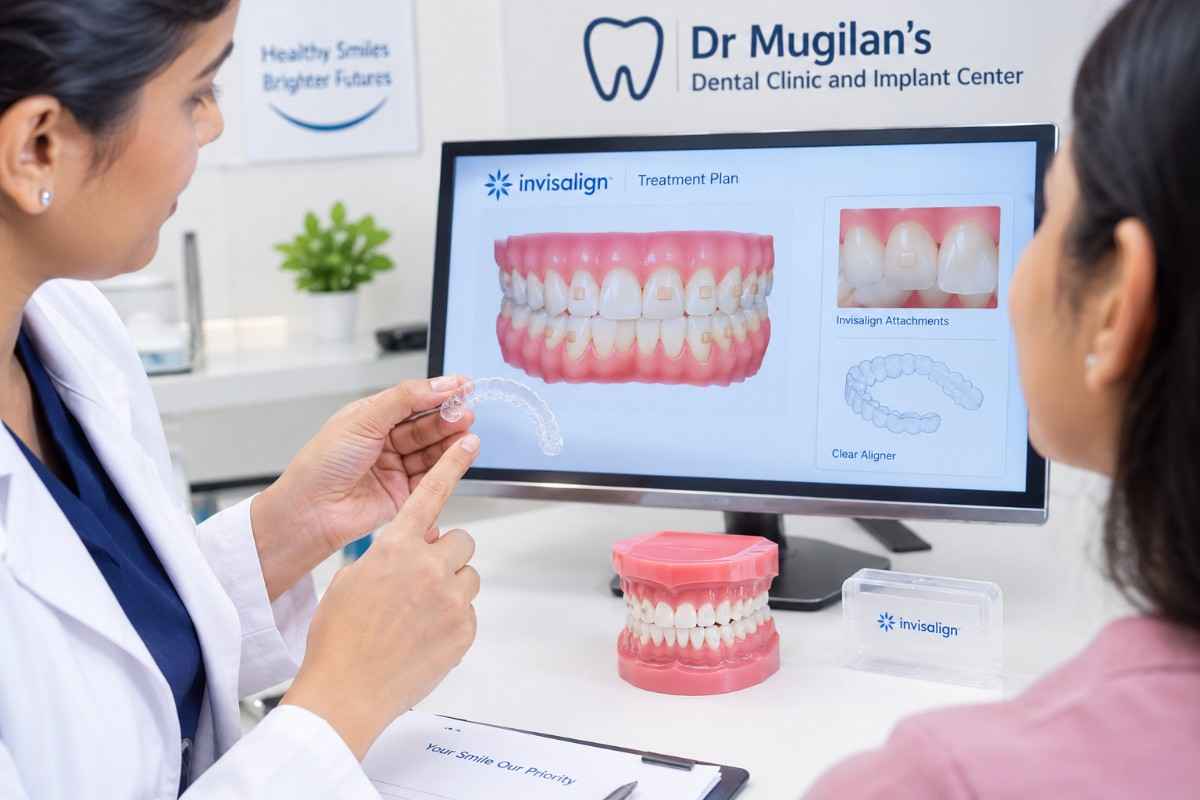
Invisalign attachments are small, tooth-coloured composite resin shapes temporarily bonded to certain teeth during clear aligner treatment. They are designed to help the aligners grip the teeth and apply forces in specific directions.
Depending on the treatment plan, attachments may be rectangular, rounded, or shaped to support particular tooth movements.
Although they are sometimes called Invisalign buttons, attachments are different from the small buttons or other components that may be used with orthodontic elastics. The exact features required depend on the patient's teeth and the orthodontist's treatment plan.
Attachments are not necessary for every clear aligner patient. Some minor alignment problems can be treated without them, while more complex movements may require additional support.
Why Are Invisalign Attachments Needed?
Teeth do not move in just one direction. Orthodontic treatment may involve rotating teeth, closing spaces, correcting crowding, or adjusting the relationship between the upper and lower teeth.
Clear aligners work by applying controlled pressure to the teeth. However, the smooth surfaces of teeth can make certain movements difficult to achieve using the aligner alone.
Attachments create additional contact points that help the aligner apply the intended forces.
1. To Correct Rotated Teeth
Some teeth, particularly canines and premolars, may be rotated out of their normal positions. Attachments can improve the aligner's grip and help guide these teeth toward the planned alignment.
The amount of correction possible depends on the degree of rotation, tooth anatomy, and overall treatment plan.
2. To Improve Tooth Movement Control
Orthodontists may need to move a tooth in a particular direction while controlling its position and angle. Specially designed attachments can help support these movements.
This is important because straightening teeth involves more than making them look aligned from the front. Their positions, roots, and relationship with neighbouring teeth also need to be considered.
3. To Support Certain Bite Corrections
Some clear aligner plans include movements intended to improve the bite. Attachments may help deliver the forces required for selected movements, depending on the case.
However, attachments alone cannot correct every bite problem. Some patients may require additional orthodontic features, a different treatment approach, or other dental procedures.
4. To Help Close Selected Spaces
When orthodontic treatment involves closing spaces between teeth, attachments may help improve control over tooth movement.
Your orthodontist will determine whether attachments are appropriate after examining your teeth and assessing your treatment goals.
Are Invisalign Attachments Visible?
Invisalign attachments are generally made from tooth-coloured composite resin, so they are designed to blend with the natural teeth.
Their visibility depends on several factors, including:
The colour and shape of the attachment.
The natural shade of your teeth.
The number and location of the attachments.
The lighting and distance from which someone views your smile.
Although clear aligners are less noticeable than conventional metal braces for many patients, attachments may still be visible at close range. They are not completely invisible.
Your orthodontist can explain where attachments may be placed and what you can expect before treatment begins.
Does Getting Invisalign Attachments Hurt?
Placing attachments is generally a straightforward dental procedure. The dentist prepares the selected tooth surfaces, applies bonding materials, positions the composite resin using a template when appropriate, and hardens it with a curing light.
The attachment placement itself usually does not require drilling into the tooth as part of the standard bonding process.
Some patients experience temporary pressure or mild discomfort when they begin wearing a new set of aligners. This is associated with the orthodontic forces moving the teeth rather than the attachment alone.
If an attachment causes persistent irritation, sharp discomfort, or problems with the aligner's fit, contact your dental clinic for an assessment.
How Long Do Invisalign Attachments Stay on Your Teeth?
Attachments generally remain in place throughout the stages of treatment when they are required. Your orthodontist may remove or replace them if the treatment plan changes.
At the end of active aligner treatment, the attachments are carefully removed and the tooth surfaces are polished.
Do not attempt to remove an attachment yourself. Trying to pull or scrape it off may damage the tooth surface or cause unnecessary discomfort.
After treatment, your orthodontist may recommend retainers to help maintain the corrected tooth positions. Retainer use is an important part of long-term orthodontic care.
How Should You Care for Teeth with Invisalign Attachments?
Attachments do not prevent you from brushing or flossing normally, but they create additional surfaces where plaque can collect if oral hygiene is inadequate.
Follow these practical care tips during treatment.
Brush Twice Daily
Use a soft-bristled toothbrush and fluoride toothpaste. Clean gently around each attachment, paying attention to the areas where the composite resin meets the tooth.
Clean Between Your Teeth
Use dental floss or suitable interdental cleaning aids every day. Your dentist can demonstrate the most appropriate technique for your teeth.
Remove Aligners Before Eating
Invisalign aligners are generally removed for meals and drinks other than plain water, according to your prescribed instructions. Eating with aligners in place may damage them or trap food against the teeth.
Clean Your Aligners Properly
Follow the manufacturer's and orthodontist's instructions for cleaning your aligners. Rinse them when removing them and avoid exposing them to hot water, which can distort the material.
Limit Frequent Sugary Snacks and Drinks
Sugar exposure, especially when frequent, increases the risk of tooth decay. Maintain a balanced diet and clean your teeth before putting your aligners back in, whenever possible.
Wear Aligners as Prescribed
Your orthodontist will advise you how many hours per day to wear your aligners and when to change to the next set. Consistent wear helps keep treatment progressing according to the plan.
What Happens If an Invisalign Attachment Falls Off?
An attachment may occasionally become loose or detach. If this happens, contact your orthodontist and explain which tooth is affected.
Do not attempt to glue the attachment back on yourself. Your orthodontist can assess whether it needs to be replaced and whether the current aligner should continue to be worn.
In the meantime, follow the clinic's instructions regarding your aligner schedule. Avoid making independent changes to your treatment plan.
Missing attachments do not always cause an immediate problem, but they may affect certain tooth movements if left unaddressed.
Are Invisalign Attachments Suitable for Everyone?
Not every patient needs attachments, and not every orthodontic concern can be managed with clear aligners alone.
Suitability depends on factors such as:
The degree of tooth crowding or spacing.
Tooth rotation and the type of movement required.
The patient's bite and jaw relationship.
Gum health and existing dental conditions.
The patient's ability to wear aligners consistently.
The need for additional orthodontic appliances or procedures.
Before starting treatment, a dental professional should assess your teeth, gums, bite, and oral health. Digital scans, photographs, X-rays, or other diagnostic records may be recommended depending on your individual needs.
A digital treatment simulation can help illustrate the proposed movements, but the final outcome and treatment duration cannot be guaranteed by a simulation alone.
Invisalign Treatment at Dr Mugilan's Dental Clinic and Implant Center
Choosing clear aligners involves more than selecting a transparent appliance. A suitable treatment plan requires careful assessment, appropriate orthodontic planning, regular monitoring, and good cooperation from the patient.
Dr Mugilan's Dental Clinic and Implant Center in Puducherry provides a range of dental services, including Invisalign aligners, smile designing, digital dentistry, dental implants, root canal treatments, tooth caps and veneers, children's dentistry, dentures, and full mouth rehabilitation.
If you are considering Invisalign treatment, discuss your concerns with the dental team. Ask whether attachments may be needed, how your teeth are expected to move, what daily care will involve, and how progress will be monitored.
To learn more about the clinic and enquire about an appointment, visit the official website:
Website: https://drmugilandentistry.com/
A consultation can help you understand the available orthodontic options and determine which approach is appropriate for your dental needs.
Conclusion
Invisalign attachments are small, tooth-coloured features that help clear aligners guide selected teeth into planned positions. They can be particularly useful for certain rotations, controlled movements, and other orthodontic corrections.
Although they may be visible at close range, attachments are designed to blend with natural teeth. Good oral hygiene, consistent aligner wear, and regular orthodontic reviews are essential for keeping treatment on track.
If you are exploring clear aligners in Puducherry, consult Dr Mugilan's Dental Clinic and Implant Center to discuss your options. An individual assessment can help determine whether Invisalign, attachments, or another orthodontic approach is suitable for achieving a healthier, better-aligned smile.