Dental Crowns vs Veneers: Which Is the Right Choice for Your Smile?
Want to improve your smile but unsure whether dental crowns or veneers are the right choice? Both treatments can enhance the appearance of teeth, but they serve different purposes. Learn how they differ in coverage, durability, treatment suitability, and cost considerations to make an informed decision with your dentist.
Dr Mugilan's Dental Team
·7 min read
A confident smile can make a meaningful difference in everyday life. However, chipped teeth, discolouration, uneven edges, and damaged enamel can sometimes affect how people feel about their smiles. Modern cosmetic and restorative dentistry offers several options to improve the appearance of teeth, including dental crowns and veneers.
Although both treatments can enhance a smile, they are designed for different dental needs. Understanding the differences between dental crowns and veneers can help you discuss the most suitable option with your dentist.
At Dr Mugilan's Dental Clinic and Implant Center, patients can explore personalised dental solutions, including tooth caps, veneers, smile designing, and other restorative treatments based on their oral health and aesthetic goals.
What Are Dental Crowns?
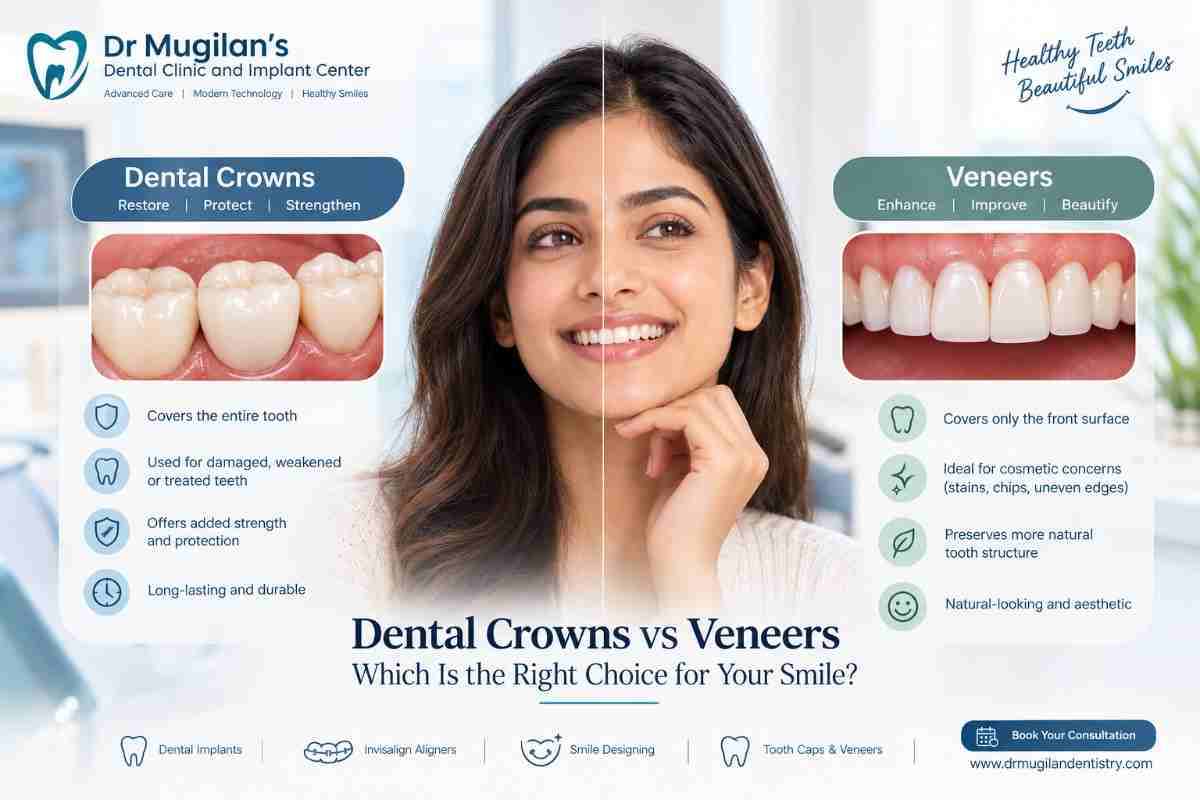
A dental crown, commonly called a tooth cap, is a restoration that covers the visible portion of a tooth. It is designed to restore the tooth's shape, strength, size, and appearance.
Crowns are often recommended when a tooth has significant structural damage or needs additional protection.
When Might You Need a Dental Crown?
A dentist may recommend a dental crown for several reasons:
- Extensive tooth decay: When a large portion of the tooth has been weakened by decay.
- After root canal treatment: Some teeth, particularly back teeth, may benefit from a crown to protect them from fracture.
- Cracked or weakened teeth: A crown can help protect a tooth when the remaining structure is suitable for restoration.
- Worn or damaged teeth: Crowns can restore the shape and function of significantly worn teeth.
- Dental implant restoration: A crown is commonly attached to a dental implant to replace the visible portion of a missing tooth.
Crowns can be made from materials such as ceramic, porcelain-based materials, metal alloys, or zirconia. The appropriate material depends on the tooth's location, bite forces, appearance requirements, and clinical circumstances.
What Are Dental Veneers?
Dental veneers are thin coverings bonded to the front surface of teeth. They are primarily used to improve the appearance of the smile while preserving as much natural tooth structure as possible.
Veneers are commonly made from porcelain or composite resin. Porcelain veneers are known for their natural-looking appearance, while composite veneers may offer a different treatment approach depending on the patient's needs.
When Are Veneers Suitable?
Veneers may be considered for patients who want to address:
- Discoloured teeth: Stains that do not respond adequately to professional whitening.
- Minor chips: Small imperfections along the edges of teeth.
- Uneven tooth shapes: Teeth that appear irregular in size or contour.
- Small gaps: Certain spaces between teeth may be improved with veneers.
- Minor cosmetic irregularities: Selected cases involving slightly uneven-looking teeth.
Veneers are not suitable for every patient. Significant tooth decay, active gum disease, insufficient enamel, heavy grinding, or substantial structural damage may make other treatments more appropriate.
Dental Crowns vs Veneers: Understanding the Main Differences
Although crowns and veneers can both improve the appearance of teeth, they differ in their coverage and primary purpose.
1. Coverage of the Tooth
A crown covers the entire visible portion of a prepared tooth, helping restore its structure and protect weakened areas.
A veneer covers only the front surface of the tooth. It is generally chosen when the tooth is reasonably healthy and the main concern is cosmetic.
2. Tooth Preparation
Dental crowns usually require more extensive reshaping of the tooth to create space for the restoration.
Veneers typically require less preparation, although some enamel removal may still be necessary. The amount depends on the tooth's position, the type of veneer, and the desired result.
Because removed natural tooth structure does not grow back, your dentist should explain the preparation required before treatment begins.
3. Strength and Protection
Crowns can provide additional coverage and support for appropriately selected teeth with significant structural damage.
Veneers improve the appearance of the front surface but do not provide the same level of overall coverage. They are generally unsuitable for teeth that require substantial structural reinforcement.
Neither treatment makes a tooth indestructible. Proper oral hygiene, routine dental reviews, and management of teeth grinding are important for both.
4. Appearance and Smile Enhancement
Both crowns and veneers can be designed to complement the colour, shape, and proportions of surrounding teeth.
Veneers are often considered for cosmetic changes involving the front teeth. Crowns can also deliver natural-looking results while addressing functional or structural problems.
Your dentist can assess tooth colour, facial proportions, gum health, and your preferred smile appearance before recommending a treatment plan.
5. Durability and Maintenance
The lifespan of crowns and veneers varies according to the material used, the quality of the restoration, oral hygiene, bite forces, and individual habits.
Both may last for many years with appropriate care, but neither is permanent. Avoid chewing hard objects, do not use your teeth to open packaging, and speak with your dentist if you grind or clench your teeth.
Regular brushing, cleaning between teeth, and professional dental check-ups help maintain the health of the teeth and gums around restorations.
Which Treatment Is Better for Front Teeth?
The right option depends on the condition of the tooth rather than its position alone.
If a front tooth is healthy but has cosmetic concerns such as minor chips, uneven edges, or persistent discolouration, veneers may be worth discussing.
If the tooth has extensive damage, a large existing restoration, or substantial structural weakness, a crown may be more appropriate.
In some cases, professional teeth whitening, orthodontic treatment, or composite bonding may be more conservative alternatives. A dental examination helps determine which options are suitable.
Can Dental Crowns and Veneers Be Part of Smile Designing?
Yes. Smile designing involves evaluating several aspects of the teeth and smile to develop a treatment plan tailored to the individual.
Depending on the clinical findings, treatment may involve veneers, crowns, teeth whitening, orthodontics, gum treatment, or other procedures. Not every patient needs multiple treatments, and cosmetic improvements should not come at the expense of healthy tooth structure.
At Dr Mugilan's Dental Clinic and Implant Center in Puducherry, patients can discuss tooth caps, veneers, and smile designing as part of a personalised approach to cosmetic and restorative dentistry.
The clinic's digital dental technology can support assessment and treatment planning where appropriate. The specific technology used and its suitability depend on the procedure and the patient's clinical needs.
What Should You Consider Before Choosing a Treatment?
Before deciding between crowns and veneers, discuss the following with your dentist:
- Your oral health: Existing decay, gum disease, cracks, and previous dental treatments should be assessed first.
- Your treatment goals: Explain whether you are primarily concerned about appearance, comfort, function, or tooth protection.
- Tooth preservation: Ask how much natural tooth structure needs to be removed.
- Material options: Understand the differences in appearance, maintenance, and suitability of available materials.
- Bite and grinding habits: Clenching or grinding may influence the treatment choice and the need for a protective night guard.
- Long-term maintenance: Ask about follow-up visits, possible repairs, and replacement requirements.
- Cost considerations: The cost depends on the material, number of teeth treated, complexity, and any additional procedures required.
A thorough consultation helps you understand the advantages, limitations, and alternatives before committing to treatment.
How to Care for Crowns and Veneers
Good oral hygiene remains essential after either procedure.
- Brush twice daily using a fluoride toothpaste.
- Clean between your teeth every day with floss or an appropriate interdental cleaning aid.
- Attend routine dental check-ups and professional cleaning when recommended.
- Avoid biting hard objects or using your teeth as tools.
- Discuss a night guard with your dentist if you grind or clench your teeth.
- Contact your dentist if a restoration feels loose, becomes damaged, or causes persistent discomfort.
Remember that crowns and veneers cover parts of natural teeth, but the underlying teeth and surrounding gums can still develop dental problems.
Consult a Dentist for the Right Smile Solution
Dental crowns and veneers can both improve a smile, but they serve different purposes. Crowns are generally used when a tooth needs more extensive coverage or restoration, while veneers are primarily intended for selected cosmetic concerns affecting the front surface of teeth.
The most appropriate choice depends on your tooth structure, gum health, bite, aesthetic preferences, and long-term oral health goals. An examination is the best way to understand your options.
If you are considering dental crowns, veneers, or smile designing, contact Dr Mugilan's Dental Clinic and Implant Center, Puducherry, to discuss your needs and arrange a consultation.
Visit https://drmugilandentistry.com/ for clinic information and appointment enquiries.
A well-planned dental treatment should aim for a natural-looking smile while preserving oral health and function for the long term.