Immediate Dental Implants in Puducherry: Can You Get a Tooth Replacement on the Same Day as Extraction? Benefits, Eligibility, and Treatment Process at Dr Mugilan's Dental Clinic and Implant Center
Immediate dental implant placement may allow selected patients to receive an implant during the same appointment as tooth extraction. Learn how this procedure works, who may be suitable, its benefits, limitations, and how digital dental planning supports personalized implant treatment in Puducherry.
Dr Mugilan's Dental Team
·8 min read
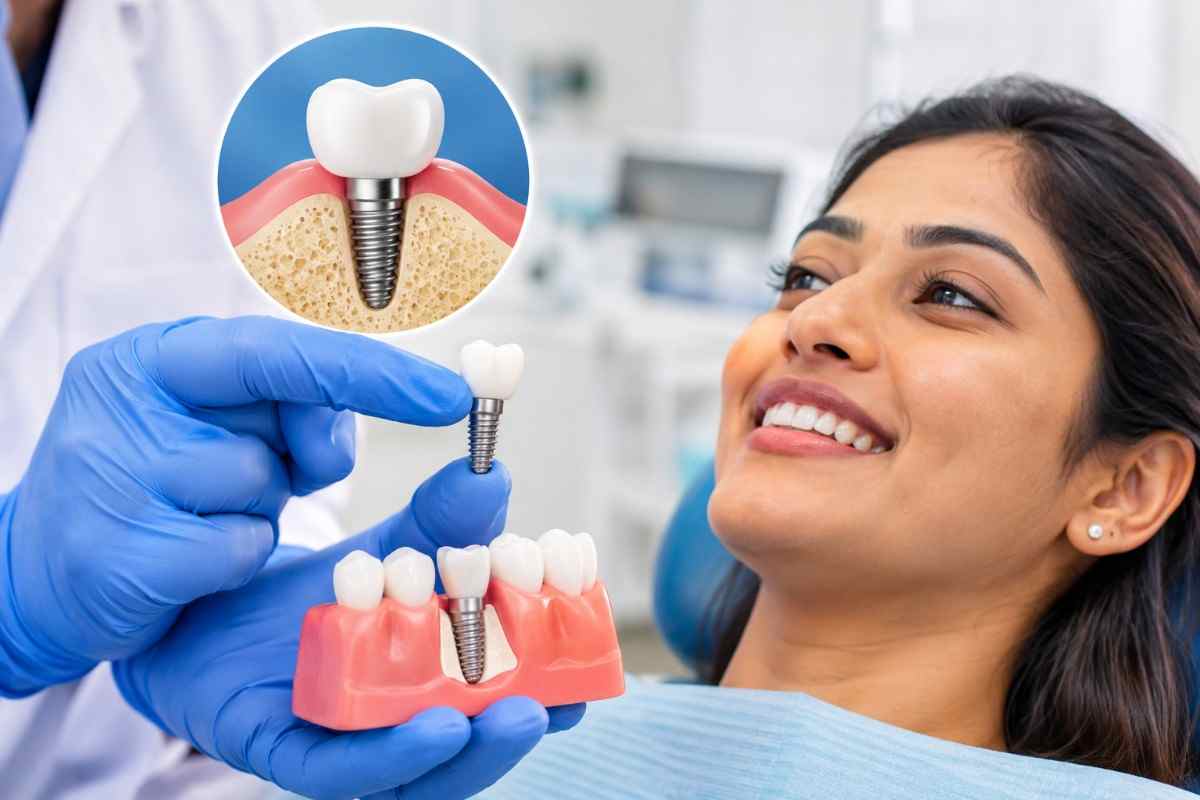
Losing a tooth can affect more than your appearance. It may influence chewing, speech, confidence, and the alignment of surrounding teeth. Dental implants offer a way to replace missing teeth with artificial tooth roots that support replacement teeth. But did you know that, in selected cases, an implant can be placed during the same appointment as tooth extraction?
This approach is known as immediate dental implant placement. It can reduce the number of separate surgical appointments for suitable patients. However, it is not appropriate for everyone. Understanding the procedure, eligibility requirements, and healing process can help you make an informed decision about dental implant treatment in Puducherry.
What Are Immediate Dental Implants?
Immediate dental implant placement is a procedure in which a dental implant is inserted into the jawbone immediately after a damaged or non-restorable tooth is extracted.
In conventional implant treatment, the dentist may remove the damaged tooth, allow the extraction site to heal, and place the implant during a later appointment. With immediate placement, extraction and implant insertion are performed during the same surgical session when clinical conditions permit.
It is important to understand that immediate implant placement does not necessarily mean receiving a permanent artificial tooth on the same day.
There are different treatment approaches:
Immediate implant placement: The implant is inserted at the time of tooth extraction.
Immediate provisional restoration: A temporary tooth may be attached shortly after implant placement in carefully selected cases.
Delayed restoration: The implant is allowed to integrate with the jawbone before the final crown is attached.
The appropriate approach depends on bone quality, implant stability, gum condition, bite forces, and other clinical factors.
How Does the Immediate Dental Implant Procedure Work?
The procedure involves careful planning and several clinical steps.
1. Initial Dental Consultation
The dentist examines the damaged tooth, surrounding gums, neighbouring teeth, and overall oral health.
Your medical history is also reviewed. Conditions such as uncontrolled diabetes, certain medications, smoking habits, and previous dental treatments may influence implant planning.
2. Digital Dental Assessment
Digital dental imaging and, when indicated, CBCT scans may help evaluate the jawbone, tooth roots, and nearby anatomical structures.
These assessments allow the dental team to understand the available bone and plan the implant position.
At Dr Mugilan's Dental Clinic and Implant Center, digital dental infrastructure supports diagnostic assessment and treatment planning according to individual requirements.
3. Tooth Extraction
If the tooth cannot be restored, it is carefully removed. The dentist aims to preserve the surrounding bone and soft tissue as much as possible.
The extraction site is then evaluated to check whether immediate implant placement is suitable.
4. Implant Placement
If the clinical conditions are favourable, the implant is positioned within the extraction site.
In some cases, additional procedures such as bone grafting may be considered. If the available bone or infection conditions make immediate placement unsuitable, the dentist may recommend allowing the area to heal first.
5. Healing and Tooth Restoration
After implant placement, the implant generally needs time to integrate with the surrounding jawbone. This biological process is called osseointegration.
A temporary restoration may be considered in selected cases, but it must be designed to avoid excessive pressure on the healing implant.
Once healing and stability are confirmed, the final dental crown can be planned and fitted.
Who Is Suitable for Immediate Dental Implants?
Immediate dental implant placement is not suitable for every patient. The dentist must assess several factors before recommending it.
Patients may be considered when:
The tooth requires extraction but the surrounding bone is sufficiently healthy.
There is adequate bone to achieve initial implant stability.
The surrounding gum tissues are suitable for the procedure.
Any infection can be appropriately managed.
The patient's medical condition allows implant surgery.
The bite and available space permit a suitable restoration.
The front teeth may sometimes be considered for immediate implant placement because maintaining the appearance of the visible gum area is important. However, these cases require particularly careful assessment of bone, soft tissue, and aesthetic factors.
Patients with significant bone loss, uncontrolled infection, or other complicating conditions may need an alternative treatment sequence.
Benefits of Immediate Dental Implant Placement
For appropriately selected patients, immediate implant placement can offer several potential advantages.
1. Fewer Separate Surgical Appointments
Combining extraction and implant insertion may reduce the number of separate surgical visits required.
This can be convenient for patients who have work, family, or travel commitments.
2. Shorter Overall Treatment Schedule in Selected Cases
Since implant placement takes place during extraction, the treatment process may be more streamlined.
However, the overall time required for healing and final crown placement still varies. Immediate placement does not eliminate the biological healing period.
3. Potential Preservation of Natural Tissue Contours
In selected cases, placing the implant soon after extraction may help maintain the surrounding tissue architecture.
However, bone and gum changes can still occur after extraction. Careful surgical planning and appropriate grafting procedures may be necessary.
4. Earlier Progress Towards Tooth Replacement
Immediate placement allows the implant treatment process to begin during the extraction appointment rather than waiting for a separate healing period before implant insertion.
The timing of the final replacement tooth depends on implant stability and healing.
Immediate vs Delayed Dental Implant Placement
Both treatment methods can be effective when appropriately selected.
Feature
Immediate placement
Delayed placement
Implant timing
At the time of extraction
After the extraction site has healed
Number of surgical stages
May combine extraction and implant insertion
Usually involves separate stages
Initial assessment
Requires favourable extraction-site conditions
Allows healing before implant insertion
Suitability
Selected clinical cases
Useful when immediate placement is unsuitable
Final crown
After appropriate healing and stability
After appropriate healing and stability
There is no single approach that is best for every patient. The dentist recommends a treatment sequence based on the condition of the tooth, bone, gums, and overall oral health.
What Are the Possible Risks and Limitations?
Like other surgical dental procedures, immediate implant placement has potential risks.
These may include:
Failure of the implant to integrate with the jawbone.
Infection or delayed healing.
Gum recession or changes in the surrounding tissue.
Insufficient initial implant stability.
Need for additional bone grafting or corrective treatment.
Aesthetic concerns, particularly around visible front teeth.
The possibility of these complications depends on the patient's clinical condition, surgical technique, implant position, and aftercare.
Patients should discuss the expected benefits, risks, alternatives, and likely treatment duration with their dentist before proceeding.
How to Care for Your Mouth After Immediate Implant Placement
Following post-operative instructions is important for supporting healing.
Consider these general care recommendations:
Follow the prescribed medication schedule: Take medicines only as directed by your dentist.
Choose suitable foods: Soft foods may be recommended during the initial healing period. Avoid hard or crunchy foods that can disturb the surgical area.
Maintain oral hygiene: Clean your mouth carefully according to your dentist's instructions. Avoid directly disturbing the surgical site during early healing.
Avoid smoking: Smoking can negatively affect healing and implant outcomes. Discuss a suitable cessation plan with your dental professional.
Attend follow-up appointments: Regular reviews help the dentist monitor healing and implant stability.
Avoid unnecessary pressure: Do not chew hard foods on the implant area unless your dentist has confirmed that it is safe.
Contact your dental clinic if you experience worsening pain, increasing swelling, persistent bleeding, fever, or other concerning symptoms.
Why Digital Planning Matters in Dental Implant Treatment
Dental implant placement requires accurate assessment of the jawbone, nearby anatomical structures, and the intended position of the replacement tooth.
Digital dental technologies can support this process through:
Three-dimensional assessment using CBCT imaging when indicated.
Evaluation of bone dimensions and anatomical structures.
Planning the implant position according to the intended restoration.
Assessment of complex dental conditions.
Improved communication between the dentist and patient.
Digital technology supports clinical decision-making, but it does not replace the dentist's examination, experience, or individual treatment assessment.
Immediate Dental Implant Treatment at Dr Mugilan's Dental Clinic and Implant Center
Choosing an appropriate dental clinic is an important part of planning tooth replacement.
Dr Mugilan's Dental Clinic and Implant Center, Puducherry, is a modern, multi-speciality digitalized dental clinic offering dental implant treatment and other comprehensive dental services.
The clinic's services include dental implants, Invisalign aligners, smile designing, complete and removable dentures, TMD disorder treatment, tooth caps and veneers, root canal treatments, kids dentistry, and full mouth rehabilitation.
Patients considering immediate dental implant placement can seek a consultation to understand their tooth condition, available bone support, treatment alternatives, and expected restoration process.
Explore the clinic's services and contact information through the official website:
Conclusion
Immediate dental implant placement can be a convenient treatment option for selected patients who need a tooth removed and replaced. By combining extraction and implant insertion in one surgical appointment, it may reduce the number of separate treatment stages.
However, immediate placement is not suitable for every patient. Bone quality, gum health, infection, implant stability, and overall medical condition all influence the decision.
If you are considering dental implants in Puducherry, a professional consultation can help determine whether immediate or delayed implant placement is more appropriate for your needs.
Visit Dr Mugilan's Dental Clinic and Implant Center to explore personalized tooth replacement options and take an informed step towards restoring your smile.