Full Mouth Rehabilitation in Puducherry: How Advanced Digital Dentistry Can Restore Missing Teeth, Improve Bite Function, and Rebuild Your Smile
Missing teeth, worn-down enamel, damaged teeth, and bite problems can affect your ability to chew comfortably and smile confidently. Full mouth rehabilitation combines different dental treatments to improve oral function and appearance. Discover how digital dentistry and personalised treatment planning at Dr Mugilan's Dental Clinic and Implant Center can support your dental health needs.
Dr Mugilan's Dental Team
·9 min read
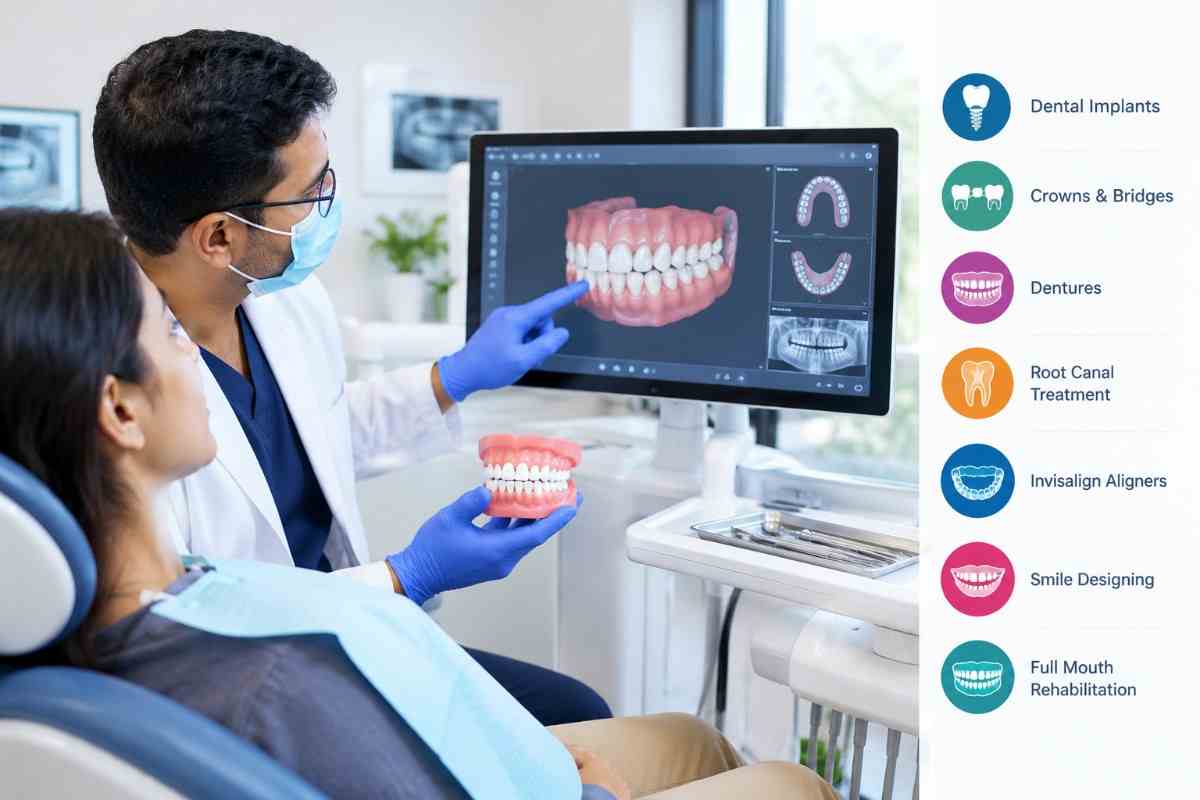
A healthy smile involves more than straight, white teeth. Your teeth, gums, jaw joints, and bite need to work together for comfortable chewing, clear speech, and everyday oral function. However, missing teeth, extensive tooth damage, worn enamel, and long-standing bite problems can gradually affect these functions.
For people experiencing multiple dental concerns, full mouth rehabilitation in Puducherry may offer a comprehensive approach to restoring oral health. By combining appropriate restorative, functional, and cosmetic dental procedures, a dentist can develop a treatment plan tailored to the patient's needs.
- At Dr Mugilan's Dental Clinic and Implant Center, digital dental technology and multidisciplinary treatment planning can help support the assessment and management of complex dental conditions. Understanding the process can help you make informed decisions about your oral health.
- What Is Full Mouth Rehabilitation?
- Full mouth rehabilitation, also called full mouth reconstruction, is a personalised dental treatment approach designed to restore the function, health, and appearance of multiple teeth.
Unlike a single filling or crown, this approach may involve several procedures across the upper and lower teeth. The treatments selected depend on the patient's oral health, the number of missing or damaged teeth, gum condition, bite alignment, and jaw function.
- Depending on individual needs, a treatment plan may include:
- Dental implants to replace missing teeth.
- Dental crowns to protect weakened or extensively damaged teeth.
- Bridges or dentures to replace missing teeth.
- Root canal treatment to manage infection or damage within a tooth.
- Tooth caps and veneers for suitable restorative or cosmetic concerns.
- Bite correction and management of certain jaw-related problems.
- Full mouth rehabilitation involving a combination of these treatments.
- Not every patient requires all these procedures. The goal is to identify the underlying problems and choose suitable treatments that work together to support long-term oral function.
- Signs You May Need Full Mouth Rehabilitation
- Several dental concerns can affect multiple teeth simultaneously. A comprehensive evaluation may be helpful if you experience one or more of the following problems.
- 1. Multiple Missing Teeth
- Missing teeth can make chewing difficult and affect the distribution of biting forces. Depending on the location and number of missing teeth, replacement options may include dental implants, bridges, or complete and removable dentures.
- Replacing missing teeth may also help maintain a more functional bite and improve speech or appearance where these have been affected.
- 2. Severely Damaged or Worn Teeth
- Teeth can become damaged through extensive decay, fractures, long-term grinding, or enamel wear. When several teeth are affected, individual treatments may need to be coordinated to restore their shape and function.
- Dental crowns, root canal treatment, and other restorative procedures may be considered depending on the remaining tooth structure and the condition of each tooth.
- 3. Difficulty Chewing Comfortably
- Pain or discomfort while chewing may result from damaged teeth, missing teeth, bite irregularities, gum disease, or jaw-related conditions. Treating the underlying cause is essential before deciding on restorative treatment.
- A dentist may assess how your upper and lower teeth meet and whether uneven biting forces are contributing to the problem.
- 4. Changes in Your Bite
- A bite that feels uneven, difficulty bringing your teeth together, or excessive wear on certain teeth may indicate a functional concern.
- A detailed examination can help determine whether the issue is related to tooth position, damaged restorations, missing teeth, or the jaw joints and muscles.
- 5. Multiple Existing Dental Problems
- Some patients have a combination of missing teeth, old restorations, recurring decay, and cosmetic concerns. In such situations, planning each procedure separately may not address how the teeth function together.
- Full mouth rehabilitation considers the overall condition of the mouth before establishing the treatment sequence.
- How Digital Dentistry Supports Full Mouth Rehabilitation
- Modern digital dental technology can assist with examination, treatment planning, and communication between the dentist and patient. The specific technologies used will depend on the clinical requirements of each case.
- Digital Assessment and Treatment Planning
- Digital records, intraoral scans, dental photographs, and appropriate diagnostic imaging can help the dentist evaluate tooth structure, spacing, bite relationships, and areas requiring treatment.
Three-dimensional imaging may be recommended when clinically indicated, particularly when additional information about the jawbone or anatomical structures is needed.
- These records can support a more detailed understanding of the patient's dental condition and help guide treatment decisions.
- Improved Visualisation
- Digital scans can create detailed representations of the teeth and surrounding structures without relying exclusively on conventional impressions.
Where suitable software is available, digital models may also help the dental team evaluate proposed restorations and explain treatment options more clearly.
- However, digital tools support clinical judgement rather than replacing the need for a thorough examination.
- Coordinating Multiple Procedures
- Full mouth rehabilitation may involve several stages, sometimes completed over an extended period. Digital records can help organise the treatment plan and coordinate restorative procedures.
The dentist can determine which teeth need immediate attention, which require preparatory treatment, and when replacement teeth or final restorations should be provided.
- At Dr Mugilan's Dental Clinic and Implant Center, digitalised dental care can support the planning process for patients requiring comprehensive restorative treatment.
- Dental Treatments Used in Full Mouth Rehabilitation
- The treatment plan depends on the patient's clinical findings, but several dental procedures may form part of full mouth rehabilitation.
- Dental Implants for Missing Teeth
- Dental implants are placed in the jawbone to support replacement teeth. They may be suitable for replacing one tooth, several teeth, or supporting certain types of full-arch restorations.
Before implant treatment, the dentist evaluates bone volume, gum health, general health factors, and the patient's ability to maintain oral hygiene. Additional procedures may be required in some cases.
- Implants are not suitable for everyone, and alternatives such as bridges or dentures may be more appropriate depending on individual circumstances.
- Dental Crowns and Bridges
- A dental crown, sometimes called a tooth cap, covers a tooth to restore its shape and provide protection when clinically indicated. Crowns may be recommended for extensively damaged teeth or teeth treated with root canal therapy.
- A bridge can replace one or more missing teeth by using supporting teeth or, in some cases, implants. The choice depends on the condition of the neighbouring teeth, available bone support, and other clinical factors.
- Complete and Removable Dentures
- Dentures can replace multiple missing teeth or all the teeth in an arch. Complete dentures are used when all natural teeth in an arch are missing, while removable partial dentures replace some missing teeth.
- Proper fit, comfort, maintenance, and follow-up adjustments are important for successful denture use. Implant-supported options may be considered for suitable patients.
- Root Canal Treatment
- When the pulp inside a tooth becomes infected or irreversibly damaged, root canal treatment may help preserve the natural tooth.
- In a full mouth rehabilitation plan, treating an affected tooth before placing its final restoration may be necessary. The dentist will determine whether the tooth can be preserved or whether another treatment is more appropriate.
- Invisalign Aligners and Smile Designing
- Some patients may benefit from orthodontic treatment to improve tooth alignment before final restorations are completed. Invisalign clear aligners may be an option for suitable cases, depending on the complexity of the alignment problem.
- Smile designing may also help plan changes to tooth shape, proportions, and appearance. Cosmetic goals should be balanced with bite function, gum health, and the long-term stability of restorations.
- The Importance of Bite Function and Jaw Health
- A successful rehabilitation plan should consider how the teeth meet during chewing and how the jaw moves.
Uneven biting forces, tooth grinding, and certain jaw joint disorders can contribute to discomfort or excessive wear. Some patients may require assessment for temporomandibular disorders (TMD), which can involve the jaw joints and surrounding muscles.
Depending on the cause, management may include conservative measures, bite-related treatment, a suitable oral appliance, or referral for further evaluation.
- Not every patient with jaw discomfort requires full mouth rehabilitation. Diagnosis should come first, and irreversible changes to the bite should only be considered when clinically justified.
- What Happens During the Full Mouth Rehabilitation Process?
- Although each case is different, treatment commonly follows several stages.
Step 1: Comprehensive examination
The dentist reviews your dental history, symptoms, gum health, existing restorations, tooth condition, and bite. Appropriate diagnostic records are collected.
Step 2: Personalised treatment planning
The dentist explains the identified problems, available treatment options, likely sequence, expected benefits, limitations, estimated costs, and anticipated timeline.
Step 3: Treating underlying problems
Where necessary, gum disease, tooth decay, infection, or other active conditions are managed before definitive restorative procedures begin.
Step 4: Restoring teeth and replacing missing teeth
The planned procedures may include crowns, implants, dentures, bridges, or other suitable treatments. Some restorations may be temporary while the dentist evaluates comfort, function, and healing.
Step 5: Review and maintenance
- Follow-up visits help assess the fit and function of restorations, monitor gum health, and identify problems early. Regular professional reviews and good home care remain important after treatment.
- How to Maintain Your Results
- Long-term results depend on the condition of your teeth and gums, the type of restorations used, and your daily oral care routine.
- To support your oral health:
- Brush twice daily with fluoride toothpaste.
- Clean between your teeth every day using suitable floss or interdental aids.
- Follow specific cleaning instructions for dentures, implants, and bridges.
- Avoid using your teeth to open packages or bite hard objects.
- Attend scheduled dental reviews and professional cleaning when recommended.
- Seek advice if you notice pain, swelling, a loose restoration, or changes in your bite.
- Patients who grind their teeth may benefit from further assessment and, where appropriate, a protective night guard.
- Choosing a Dental Clinic for Full Mouth Rehabilitation in Puducherry
- Comprehensive dental treatment requires careful assessment, clear communication, and a treatment plan based on individual needs. When considering a clinic, ask about the proposed procedures, alternative options, treatment timeline, maintenance requirements, and total estimated cost.
It is also helpful to understand which procedures can be completed at the clinic and whether referral to another specialist may be necessary.
Dr Mugilan's Dental Clinic and Implant Center is a modern, multi-speciality dental clinic in Puducherry offering dental services that include implants, Invisalign aligners, smile designing, dentures, tooth caps and veneers, root canal treatments, TMD-related care, children's dentistry, and full mouth rehabilitation.
- The clinic's digitalised approach can support the assessment and planning of complex dental needs, with treatment recommendations determined by each patient's clinical condition.
- Rebuild Your Smile With a Personalised Dental Plan
- Missing teeth, damaged restorations, worn enamel, and bite problems can affect everyday comfort and confidence. Full mouth rehabilitation offers a coordinated approach to addressing multiple dental concerns, with the aim of improving oral function and appearance.
The right treatment depends on a detailed dental examination rather than a standardised package. Early assessment may also help identify problems before they become more complicated.
If you are exploring full mouth rehabilitation in Puducherry, visit Dr Mugilan's Dental Clinic and Implant Center to learn more about the clinic's dental services and access its contact information for consultation and appointment booking. Discuss your symptoms, expectations, and treatment options with a dental professional to determine the approach that best suits your needs.