Dental Wear in Puducherry: How Acid Erosion, Teeth Grinding, and Everyday Habits Can Damage Your Teeth
Dental wear can gradually affect your enamel, change your tooth shape, increase sensitivity, and impact your bite. From acidic foods and drinks to teeth grinding and everyday habits, understanding the causes of dental wear can help you protect your natural teeth and explore suitable treatment options in Puducherry.
Dr Mugilan's Dental Team
·8 min read
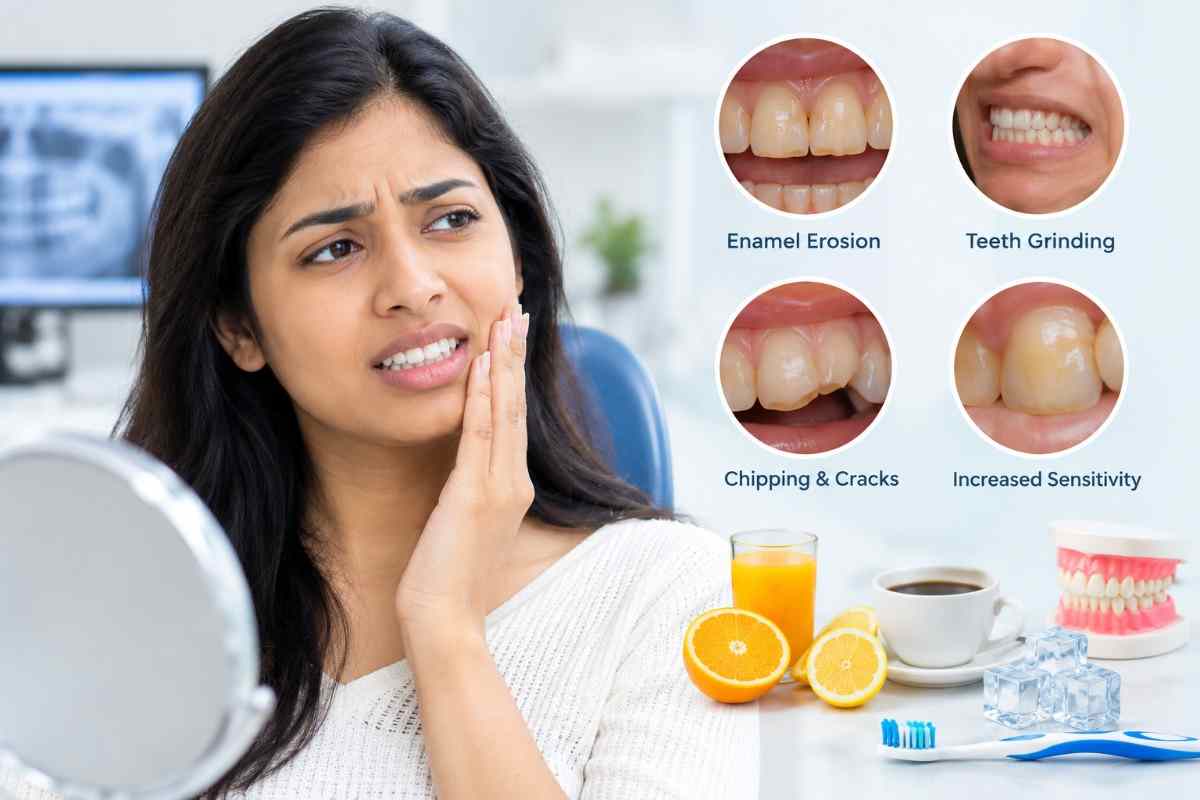
your teeth help you chew, speak, and smile confidently. However, everyday activities and certain habits can gradually wear down tooth surfaces. This process, known as dental wear, may cause sensitivity, flattened teeth, changes in tooth shape, and discomfort while eating. Recognising the early signs can help you seek appropriate dental care before the damage becomes more extensive.
If you have noticed that your teeth appear shorter, feel more sensitive, or have developed rough edges, understanding the causes of dental wear is an important first step. Patients looking for dental care in Puducherry can consult a dental professional to identify the cause and discuss suitable treatment options.
What Is Dental Wear?
Dental wear refers to the gradual loss of tooth structure through physical or chemical processes. The outer enamel protects the teeth, while the underlying dentin provides structural support. When enamel becomes thinner or tooth structure is lost, teeth may become more sensitive and vulnerable to further damage.
Dental wear does not always cause noticeable symptoms in its early stages. Some people discover it during a routine dental examination, while others seek help after experiencing sensitivity, changes in their bite, or visible damage.
The appropriate treatment depends on the type of wear, its severity, the condition of the remaining tooth structure, and the underlying cause.
Common Causes of Dental Wear
Dental wear can develop for several reasons. Identifying the contributing factors helps a dentist recommend a suitable treatment and preventive plan.
1. Acid Erosion From Foods and Drinks
Acid erosion occurs when acids soften and gradually dissolve the minerals in tooth enamel. Frequent exposure to acidic foods and drinks can increase the risk.
Common sources include:
Carbonated soft drinks.
Citrus fruits and fruit juices.
Sports and energy drinks.
Vinegar-based foods and acidic sauces.
Frequent consumption of other acidic products.
The frequency and duration of acid exposure matter. Regularly sipping acidic drinks throughout the day may expose teeth to acid for longer periods.
To reduce the risk, drink water after consuming acidic products, avoid holding acidic drinks in your mouth, and wait approximately 30–60 minutes before brushing after significant acid exposure. This allows softened enamel to recover some of its hardness through saliva.
2. Teeth Grinding and Clenching
Teeth grinding, also known as bruxism, involves clenching or rubbing the teeth together. It can occur during sleep or while a person is awake, sometimes without them realising it.
Over time, repeated grinding may contribute to:
Flattened chewing surfaces.
Small chips or cracks.
Increased tooth sensitivity.
Jaw muscle soreness.
Discomfort around the jaw joints.
Stress, sleep-related factors, certain medications, and other conditions may contribute to grinding. The cause varies between individuals, so treatment should be based on a proper assessment.
A dentist may recommend monitoring the teeth, addressing contributing factors, or using a custom-made protective appliance when appropriate. A mouthguard can help protect teeth from further damage, although it does not necessarily eliminate grinding itself.
3. Aggressive Toothbrushing
Brushing is essential for oral health, but excessive pressure and abrasive brushing techniques may contribute to tooth surface damage, particularly near the gumline.
Using a hard-bristled toothbrush or brushing vigorously can also irritate the gums and contribute to gum recession.
To protect your teeth:
Use a soft-bristled toothbrush.
Apply gentle pressure.
Brush with fluoride toothpaste.
Avoid scrubbing aggressively from side to side.
Replace toothbrushes when their bristles become worn.
If you notice notches near the gumline or persistent sensitivity, ask your dentist whether brushing technique or another cause may be contributing.
4. Everyday Habits That Put Teeth at Risk
Some habits place unnecessary stress on the teeth. Chewing ice, biting fingernails, opening packages with your teeth, or frequently chewing hard objects may cause chips, cracks, or localised wear.
Avoid using your teeth as tools. If you frequently chew hard items or notice repeated damage, discuss the habit with your dentist.
Early Warning Signs of Dental Wear
Dental wear can progress gradually, so it is useful to recognise changes in your teeth.
Increased Tooth Sensitivity
You may experience discomfort when drinking cold water, eating hot foods, or consuming sweet or acidic products. Sensitivity can occur when enamel becomes thinner or dentin becomes exposed. However, cavities, cracked teeth, and gum recession can cause similar symptoms.
Flattened or Shortened Teeth
Teeth that have lost some of their natural shape may develop flatter chewing surfaces or appear shorter than before. This can sometimes indicate ongoing grinding or other forms of wear.
Yellowish Appearance
As translucent enamel becomes thinner, the naturally darker dentin underneath may become more visible. This can make teeth appear more yellow. Discolouration can also have other causes, so a dental examination is important before choosing a cosmetic treatment.
Rough Edges, Chips, or Cracks
Worn teeth may develop uneven edges, small chips, or cracks. Larger cracks can compromise the tooth and require prompt assessment.
Changes in Your Bite or Jaw Comfort
Advanced wear may affect how your teeth meet when you close your mouth. Some people also experience jaw discomfort or difficulty chewing. These symptoms deserve professional evaluation.
How Is Dental Wear Diagnosed?
A dental examination helps determine whether tooth structure has been lost and what may be causing it.
Your dentist may:
Ask about sensitivity, discomfort, diet, oral hygiene, and grinding habits.
Examine enamel, dentin, chewing surfaces, and areas near the gums.
Check your bite and look for signs of clenching or grinding.
Review previous dental work and relevant medical history.
Recommend dental X-rays or other investigations when clinically indicated.
Digital dental technology may support examination, treatment planning, and communication about restorative options. However, the appropriate diagnostic method depends on the patient's individual needs.
Treatment Options for Dental Wear in Puducherry
There is no single treatment suitable for every case. The goal is to manage the cause, protect remaining tooth structure, and restore function when necessary.
Preventive Care and Fluoride
Early or mild wear may be managed by reducing acid exposure, improving brushing habits, and using fluoride toothpaste. Your dentist may recommend additional preventive products depending on your sensitivity and risk factors.
Dental Bonding
For selected cases, tooth-coloured restorative material can repair small chips or areas of lost tooth structure. Bonding may improve appearance and protect affected areas, depending on the location and extent of the damage.
Dental Crowns
When a tooth has lost substantial structure or needs additional protection, a dental crown may be considered. Crowns cover the visible portion of a tooth and can help restore its shape and function when clinically appropriate.
Veneers and Smile Designing
For selected front teeth, veneers may help improve shape and appearance. They are not suitable for every worn tooth, particularly when the underlying cause is still active or there is insufficient tooth structure.
Smile designing should begin with an assessment of tooth health, bite function, and patient expectations rather than appearance alone.
Full Mouth Rehabilitation
When significant wear affects multiple teeth and the bite, a dentist may consider a comprehensive treatment plan known as full mouth rehabilitation. Depending on the case, this may involve several restorative procedures designed to improve chewing function, protect remaining tooth structure, and address appearance.
Treatment can be complex, so planning should consider long-term maintenance, the cause of the wear, and the health of the teeth and gums.
How Can You Prevent Further Dental Wear?
A few consistent habits can help reduce avoidable damage:
Brush twice daily using fluoride toothpaste and a soft-bristled toothbrush.
Limit frequent exposure to acidic foods and drinks.
Rinse with water after consuming acidic products.
Avoid brushing immediately after acid exposure.
Do not chew ice or use your teeth to open objects.
Seek advice if you clench or grind your teeth.
Attend routine dental check-ups.
Get persistent sensitivity, chips, or changes in your bite examined early.
Prevention is especially important when dental wear is ongoing. Restoring a tooth without addressing the cause may leave it vulnerable to further damage.
Dental Wear Treatment at Dr Mugilan's Dental Clinic and Implant Center
If you are experiencing tooth sensitivity, flattened teeth, chipped edges, or changes in your bite, a dental consultation can help identify the cause and determine the next steps.
Dr Mugilan's Dental Clinic and Implant Center in Puducherry is a multi-speciality dental clinic offering services that include digital dentistry, tooth caps and veneers, root canal treatments, smile designing, and full mouth rehabilitation. The most appropriate option depends on the condition of your teeth and your individual treatment needs.
To learn more about the clinic and its dental services, visit https://drmugilandentistry.com/. You can use the website to explore contact information and enquire about an appointment.
Conclusion
Dental wear may develop through acid erosion, teeth grinding, aggressive brushing, and other everyday habits. Early warning signs include sensitivity, flattened teeth, yellowish changes, chipped edges, and discomfort when chewing.
Recognising these changes early can help you protect your natural teeth and avoid unnecessary damage. Good oral hygiene, practical lifestyle changes, and regular dental examinations all play an important role in prevention.
If you are concerned about worn teeth or persistent sensitivity, consult a dental professional for an individual assessment. Visit Dr Mugilan's Dental Clinic and Implant Center at https://drmugilandentistry.com/ to explore the clinic's services and enquire about dental care in Puducherry.